
Business Continuity Audits & Risk Assessments
Agility helps organizations identify vulnerabilities, quantify risk, and build stronger continuity strategies before a disruption forces the issue.












The Risks You Haven’t Identified Are the Ones That Will Hurt You
Audits and risk assessments are how organizations close that gap before an event occurs. They evaluate existing continuity plans against real-world scenarios, identify single points of failure across technology, facilities, and operations, quantify the financial and operational impact of specific disruption types, and produce a prioritized roadmap for strengthening resilience.
The value isn’t just internal. Regulators, insurers, and enterprise customers increasingly expect documented evidence of continuity preparedness. A well-executed audit produces the kind of structured, defensible documentation that satisfies those requirements and gives leadership confidence that the organization can respond effectively when conditions deteriorate.
Audits & Risk Assessments with Agility

Business Impact Analysis (BIA)
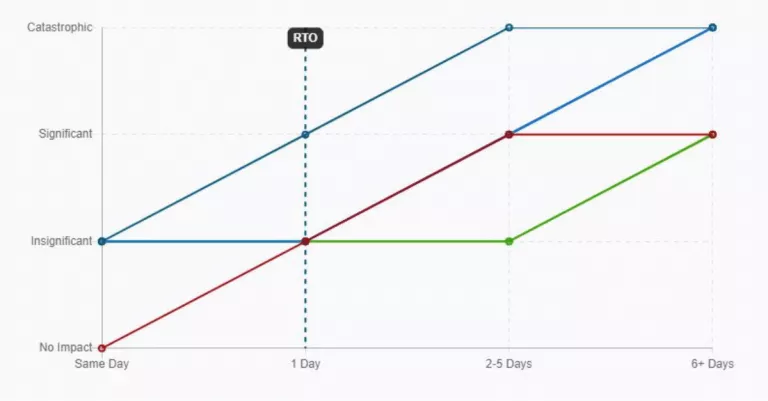
A BIA quantifies the operational, financial, and reputational impact of downtime across critical business functions. Agility’s BIA process identifies which functions are most time sensitive, what dependencies exist between them, and what recovery time objectives your organization should be planning toward.

Risk, Vulnerability & Penetration Testing
Agility identifies threats across power, weather, cyber, facility, and supply chain vectors, then assesses the likelihood and potential impact of each. Infrastructure and dependency mapping uncovers hidden points of failure across technology, vendor, and facility relationships. Penetration testing validates your security posture against real-world attack scenarios before a threat actor does it for you.

Ransomware Impact Analysis (RIA)
A ransomware attack affects more than IT systems; it disrupts data, operations, and recovery capacity simultaneously. Agility’s RIA evaluates your existing policies, data, and operations from both a continuity and recovery perspective, producing a clear picture of your exposure and a roadmap for reducing it.

Continuity Program Audits & Testing
Agility reviews existing continuity plans, documentation, governance, and recovery strategies to evaluate maturity and identify gaps. Tabletop exercises and scenario-based simulations validate plans through practice, building response confidence, clarifying roles, and producing an actionable improvement roadmap for your organization.

How a Florida Long-Term Care Facility Achieved 100% Compliance and Zero Unpatched Vulnerabilities with Continuous Penetration Testing and Tabletop Exercises
FNBO Impresses Stakeholders with Flawless Resiliency Test
Talk to an Audit & Risk Assessment Expert
More for Audits & Risk Assessments


Start Your Risk Assessment
Understanding your vulnerabilities before a disruption occurs is the foundation of effective continuity planning. Agility’s audit and risk assessment process gives your organization a clear picture of where you stand and a roadmap for getting stronger.
Frequently Asked Questions
- What are audits and risk assessments? +
-
An audit evaluates your existing continuity capabilities — plans, processes, systems, and resources — to determine how prepared your organization really is. A risk assessment identifies what could disrupt your operations, how those risks are likely to occur, and what the consequences would be if they did. Together, they create a clear, prioritized roadmap for improving resilience across power, technology, facilities, cyber, and operational dependencies. Key elements include business impact analysis, risk and vulnerability identification, gap analysis against best practices, dependency and critical system mapping, and compliance and readiness review.
- How long does an audit or risk assessment take? +
-
The timeline depends on the scope and complexity of your organization. A focused risk assessment or business impact analysis for a single location or business unit can typically be completed in a few weeks. A comprehensive continuity program audit covering multiple locations, departments, and technology dependencies may take longer. Agility works with your team to scope the engagement appropriately and deliver findings on a timeline that supports your planning cycle.
- Does Agility help implement the recommendations? +
-
Yes. Agility's audit and risk assessment process is designed to produce actionable findings, not just reports. Following an assessment, Agility works with your team to prioritize gaps, develop improvement plans, and implement continuity solutions across power, workspace, technology, and cyber resilience. For many organizations, the audit is the starting point for a broader continuity program — not a standalone exercise.
- How often should a business conduct a risk assessment or continuity audit? +
-
Most continuity frameworks recommend conducting a full risk assessment or continuity audit at least annually. Additionally, assessments should be revisited after significant organizational changes — including facility moves, major technology implementations, mergers or acquisitions, significant workforce changes, or after a disruption event that exposed gaps in existing plans. Regulatory requirements in some industries, including financial services and healthcare, may specify minimum assessment frequencies. Agility can help your team establish a review cadence that aligns with both your operational calendar and any applicable compliance requirements.
- What’s the difference between a business impact analysis and a risk assessment? +
-
A business impact analysis and a risk assessment address different questions. A risk assessment asks: what threats could affect our organization, how likely are they, and what would the impact be? A business impact analysis asks: if a disruption occurs, which of our functions are most critical, how quickly do they need to be restored, and what are the downstream consequences of extended downtime? The two are complementary — a risk assessment identifies the threats worth planning for, while a BIA ensures your recovery priorities are aligned with your most time-sensitive operations. Most organizations benefit from conducting both as part of a comprehensive continuity planning process.