
Scotiabank: Organizing Remote Work for a Business to Minimize Disruption
Read more
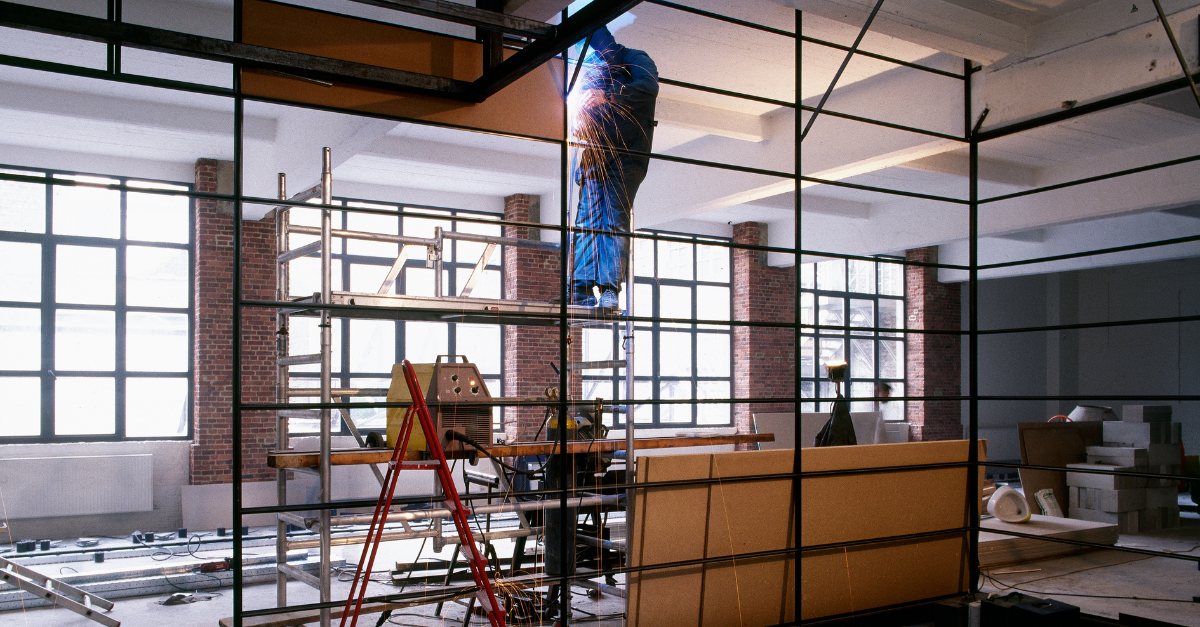
A renovation or remodel is planned well in advance; your business continuity plan should be too. Commercial renovations routinely run longer than expected — and without the right preparation, a scheduled closure can turn into an unplanned crisis. Agility Recovery’s Renovation & Remodel Continuity Toolkit walks you through a three-phase approach of pre-planning, preparation, and managing operations during disruption and includes six ready-to-use resources your team can put to work immediately.
In addition to an intro guide, the toolkit includes six resources built for every phase of your renovation or remodel:
This toolkit is designed for business continuity planners, operations leaders, and facilities managers at organizations where a renovation or remodel carries real operational and compliance stakes. It’s particularly relevant for financial services and banking, healthcare, retail, hospitality, and government and public sector — industries where customer-facing operations, regulatory requirements, and physical access are closely tied together. But no matter the industry, if your organization has a facility that will be temporarily unavailable for any reason, the framework applies.
Phase 1: Pre-planning
Start 60–90 days before your renovation begins. Define your recovery time objective, map your critical functions, identify compliance requirements that cannot lapse, and engage your recovery vendor before urgency drives the conversation.
Phase 2: Preparation
The 30 days before your closure are your execution window. Lock down workspace, test connectivity and systems, brief your team, and communicate proactively to customers. The organizations that handle renovations best treat communications as a priority, not an afterthought.
Phase 3: During Disruption
Run daily standups, maintain your operations log, track costs, and start planning your return at the halfway point — not the last week. Your recovery workspace is your real workspace. Treat it that way.
Agility Recovery has helped organizations across industries plan for and recover from business disruptions for over 35 years. Our solutions include mobile recovery centers, workspace recovery, technology deployment, cloud and DRaaS services, and purpose-built financial institution recovery through ReadyFinancial+.
When you work with Agility, you’re not managing your renovation closure alone. Our test and declare managers work with you in advance to scope your needs, place equipment on standby, and deploy within hours of your go-date so your team shows up to a workspace that’s ready.
Yes, organizations need a business continuity plan for a renovation or remodel, especially if the facility supports customer-facing operations, regulated activities, or revenue-generating functions that cannot pause. A renovation or remodel closes your facility on a known date, which means you have time to plan. Organizations that treat the closure as a continuity event — rather than just a construction project — experience less disruption to staff, customers, and compliance obligations.
Planning for a renovation closure should begin 60–90 days before your closure date. This gives you time to complete a business impact analysis, select and contract with a recovery vendor, secure temporary workspace, test systems and connectivity, and communicate proactively to customers and staff. Vendor lead times alone make early engagement critical.
Any organization with a physical facility that serves customers, houses regulated operations, or supports functions that cannot be easily paused needs a renovation continuity plan. This is especially relevant for banks and credit unions, healthcare providers, government offices, retailers, and hospitality businesses, but the framework applies broadly to any organization where a facility closure has operational or compliance consequences.
A mobile recovery center (MRC) is a self-contained, deployable workspace unit that arrives on-site via truck and can be operational within 24 hours. MRCs are climate controlled, ADA accessible, and can be configured with workstations, private offices, conference areas, server racks, satellite and LTE connectivity, and security cameras. For financial institutions, they can include compliant safes, teller stations, and night drop boxes. No special permits are required.
Recovery is how an organization resumes business operations during or after a disruption — it is immediate and operational. Remediation addresses immediate safety concerns to stop further damage. Restoration is the longer process of returning a facility to its pre-disruption state, which can take days, months, or years. Most organizations cannot afford to pause operations while restoration is completed, which is why recovery runs in parallel.
Renovation continuity differs from disaster recovery in scope and timing. Disaster recovery typically refers to IT and data systems recovery following an unplanned event. Renovation continuity is broader: it addresses workspace, staffing, communications, compliance, and technology continuity for a scheduled facility closure. The same vendors and tools used for disaster recovery can often support renovation scenarios, and the best time to establish that relationship is before you need it.