
When an office floods, most businesses lose more than furniture and flooring. They lose access to their workspace, their systems, and their ability to serve customers — sometimes for days, sometimes for weeks. How quickly you recover depends less on the severity of the flood and more on how prepared you were before it happened.
This post covers what to do in the immediate aftermath of an office flood, how to protect your people and critical assets, and how to keep your business running while your facility is out of commission.
The First 24 Hours Matter Most
The actions taken in the first hours after a flood significantly affect how long recovery takes and how much the total damage costs. The priority order is consistent regardless of the cause, whether a burst pipe, storm surge, sprinkler failure, or sewage backup.
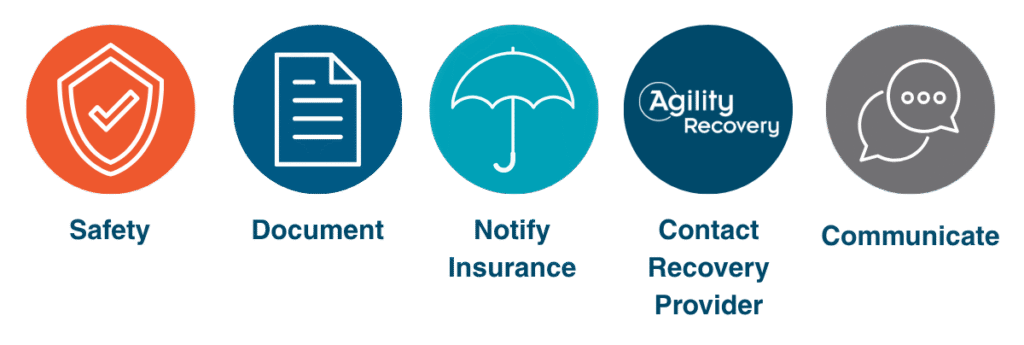
1. Ensure safety before anything else.
Water and electricity are the immediate life-safety concern. Do not re-enter the building until the power has been shut off and the space has been assessed. If there is any uncertainty about structural integrity or contamination, particularly with sewage or floodwater from outside, keep people out until a professional has cleared the space.
2. Document everything before cleanup begins.
Before removing a single item or calling a restoration crew, photograph and video the entire affected area. Capture water levels, damaged equipment, furniture, and building materials. This documentation is essential for insurance claims and, in regulated industries, for compliance records.
3. Notify your insurance carrier.
Most commercial property policies have reporting windows. Call as soon as possible after ensuring safety. Ask specifically about coverage for business interruption, temporary relocation costs, and equipment replacement, not just physical property damage.
4. Contact your business continuity provider.
If you have a pre-contracted recovery plan, this is when it activates. Your provider can begin coordinating temporary workspace, equipment, and logistics while you’re still managing the immediate situation on-site. The earlier you make this call, the faster alternative operations can begin.
5. Communicate with employees, customers, and vendors.
People need to know what happened, what it means for them, and what the plan is, even if the plan is still being formed. A brief, factual update is better than silence. Designate one person to manage communications so the message stays consistent.
Protect What You Can
Once safety is confirmed and documentation is done, the focus shifts to limiting further damage.
Equipment and electronics
Do not power on water-damaged electronics. Move undamaged equipment to a dry area or off-site storage as quickly as possible. Servers, workstations, and networking gear are priorities, but only move them if you can do so safely.
Physical records and documents
Paper records exposed to water deteriorate fast, particularly in warm or humid conditions. Prioritize anything irreplaceable: signed contracts, financial records, compliance documents. Wet paper can sometimes be salvaged if frozen quickly; a document recovery specialist can advise.
Inventory and assets
Depending on your industry, damaged inventory may need to be documented and disposed of under specific protocols. Healthcare facilities, food service operations, and financial institutions often have regulatory requirements around what can and cannot be salvaged.
Keep the Business Running
The biggest operational question after a flood is where your people work and how they access the systems they need. The answer depends on what you had in place before the flood happened.
Temporary workspace
For businesses that cannot shift fully to remote work, or where in-person operations are essential, a temporary workspace solution gets employees back to functioning workstations quickly, often at or near the affected location. Mobile office units, trailer-based workspace, and pre-configured office setups can be deployed within hours for businesses with pre-contracted recovery services.
Remote work as a bridge
For roles that can operate remotely, activating a remote work protocol immediately limits how much revenue and productivity is lost during the transition. The key is having remote access to critical systems established in advance — VPN access, cloud-based files, communication tools — so the switch requires no setup under pressure.
Customer and vendor continuity
Identify which customer commitments are most time sensitive and prioritize those first. Communicate proactively rather than waiting for customers to follow up. For vendor relationships, notify key suppliers of the situation early, particularly if it affects order fulfillment, service delivery, or payment timing.
What a Flood Exposes About Your Business Continuity Plan
A flood is one of the most common and disruptive events a business can face, and it is also one of the most revealing. Organizations that recover quickly almost always had a few things in place before the event:
A documented response plan
Knowing in advance who is responsible for what — safety, communications, insurance, facilities, IT, operations — removes the confusion and delay that compounds damage in the early hours.
Pre-contracted recovery services
Businesses that have established relationships with a recovery provider don’t have to start from scratch in the middle of a crisis. Equipment, workspace, and logistics are already arranged. The call activates the plan rather than starting a search.
Tested systems
Backup systems — data backups, remote access, communication protocols — that have never been tested often fail when they’re needed. Regular testing is the only reliable way to know your plan works.
A business impact analysis
Understanding which functions are most critical to revenue and operations, and what the cost of downtime is for each, shapes how recovery resources get prioritized. Without it, decisions get made on gut feel under pressure.
If a flood has revealed gaps in your plan, the time to address them is during recovery — not after the next event.
If a flood shut down your office today, how quickly could you get back to work?
Find out what a temporary workspace solution looks like for your business.
When a credit union experiences an outage, every minute matters. Members still need access, services must remain available, and communities continue to rely on uninterrupted operations.
This on-demand video shows how credit unions stay open during disruptions using Agility Recovery’s mobile branch solutions. Purpose-built for financial operations, these turnkey units provide secure, climate-controlled workspaces with teller stations, drive-through access, backup power, and reliable connectivity.
See how Agility delivers and configures mobile branches quickly, often in less than a day, allowing credit union teams to continue serving members safely and efficiently during extended outages.
With decades of experience supporting credit unions and regulatory readiness, Agility Recovery helps institutions stay resilient, prepared, and operational no matter what comes next.
In today’s unpredictable world, business resilience is no longer optional—it’s essential. That’s why FNBO (First National Bank of Omaha) partnered with Agility to ensure their teams could operate without disruption, no matter the crisis.
During our recent interview, FNBO leaders shared their journey, the challenges they faced, and the measurable impact of building a strong business continuity plan.
The Challenge
FNBO operates across multiple regions, supporting thousands of customers who expect uninterrupted access to financial services. That responsibility brought a pressing need: keep operations running no matter what. Meeting strict regulatory standards, maintaining communication during crises, and giving leadership confidence in recovery were all critical priorities. Simply put, “good enough” wasn’t good enough—continuity had to be proven, tested, and guaranteed.
Agility in Action
That’s where Agility came in. By partnering with Agility, FNBO gained more than a plan—they gained a partner prepared to deliver resilience on demand. Agility provided guaranteed access to backup power and fuel supply, ensuring systems could stay online during outages. Flexible workspace recovery meant employees could continue working, whether through mobile units or one of more than 3,200 global office locations. Crisis communication tools gave FNBO the ability to deliver messages quickly, track accountability, and connect with staff when it mattered most. At the same time, IT resilience, cybersecurity protections, and validated recovery plans meant regulatory audits were no longer a source of worry but of confidence.
The Results
The impact was undeniable. FNBO achieved operational recovery in hours instead of days, expanded preparedness coverage by 177%, and improved response efficiency by nearly 50% during real-world incidents. Every one of these gains translated into tangible business value: uninterrupted service for customers, renewed trust from regulators, and a stronger sense of confidence across the organization.
The Conclusion
FNBO’s story underscores a powerful truth: continuity is not just a safeguard—it’s a strategy for growth, trust, and resilience. By turning risk into readiness, they’ve proven that disruptions don’t have to mean downtime. With Agility by their side, FNBO has transformed uncertainty into a source of strength, ensuring that no matter what the future brings, they are ready to face it.
When an unexpected disruption threatens a financial institution, the stakes are high. Members rely on consistent access to their money, their accounts, and their community branch. For Meriwest Credit Union, ensuring that continuity was non-negotiable.
That’s where Agility Recovery stepped in.
A Partner in Resilience
Eric, a recovery engineer at Agility Recovery, explains the mission simply as “We make sure businesses stay open by deploying mobile recovery units, generator power, data connectivity, and everything needed to keep operations running.”
For Meriwest, that meant something tangible: staying open for members, even when their primary facility was inaccessible.
Inside the Mobile Recovery Center
Agility deployed a Mobile Recovery Center customized for Meriwest’s operations. Walking inside feels like stepping into a fully functional branch office:
- Member Experience: The layout mirrored an in-branch environment, allowing members to interact with staff just as they normally would
- Teller Stations: Two fully equipped teller windows allowed staff to process daily transactions.
- Connectivity & Power: Generator backup and secured data connections ensured real-time access to member accounts.
“Customers can come here and do business just like they were inside the facility,” Eric shared. “That’s the whole point of this recovery center.”
Why It Matters
For MeriWest, this wasn’t just about equipment or logistics — it was about trust. By activating their Mobile Recovery Center, they avoided costly downtime and reassured members that they were prepared for anything.
The impact was clear:
- Uninterrupted service for members during a potential outage.
- Operational confidence for staff, who had the tools to keep working.
- Peace of mind for leadership, knowing their investment in preparedness paid off.
Resilience in Action
This story isn’t just about recovering from disruption — it’s about being ready before it strikes. Agility Recovery helps financial institutions like MeriWest prove to their members that continuity isn’t a hope, it’s a plan.
Because when the unexpected happens, the ability to serve customers without missing a beat makes all the difference.
When disaster strikes, the speed and quality of your response can mean the difference between weeks of downtime and business as usual. Just ask Jason Khoo, VP of Operations at Metro City Bank.
When one of the bank’s Houston branches was ravaged by a three-alarm fire, Jason faced every business leader’s nightmare—total loss of a facility, no backup location, and a customer base that still needed service.
A Fire No One Saw Coming
“I got a call right after our branch managers’ meeting. They said there was smoke coming from the ceiling,” Jason recalls. “I thought it might be minor. But an hour later, the building was engulfed, and eventually the second and third floors collapsed into the first.”
With 145 firefighters on scene and a total structural loss confirmed, Jason had one priority: getting the branch back online to continue serving Metro City Bank’s loyal customers—many of whom rely on the branch for everyday banking needs.
Agility Recovery Answers the Call
After contacting several vendors, one name kept surfacing: Agility Recovery. A fellow banker had recommended Agility after a flood had shuttered one of their branches. Jason reached out—and the difference was immediate.
“It was easy. Tyler from Agility connected me to the rest of the team, and the next day we had a call with Agility, our provider FIS, and our internal teams to hash out the logistics,” Jason said. “We called on a Wednesday or Thursday, and by Sunday the mobile branch arrived. One day later, it was fully operational.”
A Fully Functional Bank Branch—Within Hours
Agility deployed a fully equipped mobile banking center to the site, complete with networking capabilities, physical security features like CCTV, and room for staff to serve customers. By Monday morning, the Metro City Bank team was welcoming its first customer in the temporary location—just days after the fire.
Recovery Shouldn’t Be a Gamble
“What really struck me,” Jason noted, “was how crucial it is to have a plan—and the right partner. Before this, we hadn’t thought deeply about disaster recovery for standalone branches. Now? It’s a core part of our business continuity strategy.”
Agility Recovery didn’t just provide equipment—they delivered confidence.
“They were fast, professional, and knew exactly what to do. It was like a roadshow, but for something serious. They made it easy.”
Jason Khoo, VP of Operations, Metro City Bank
Why Agility Recovery Was the Only Option
While there are many providers who handle elements of recovery, Jason is clear: “Agility was the only partner who could stand up a fully functional bank branch in hours. Not days. Not weeks. Hours. That made all the difference.”
Don’t Wait for a Crisis to Find a Partner
The story of Metro City Bank’s recovery is a testament to the power of preparation, partnership, and speed. Disasters don’t wait, and neither should your continuity planning.
Is your business ready to bounce back? Learn more about how Agility Recovery can help you maintain operations—even in the face of the unexpected.
In this real-world recovery, see how Metro City Bank overcame a total loss event after a fire devastated their Houston branch and how Agility Recovery helped them reopen in just days with a fully operational mobile banking center.
In this on-demand video, see how their team responded in real time working closely with Agility Recovery to deploy a mobile banking center and resume operations in just days. Explore how this real-world example underscores the value of a clear, practiced continuity plan and a reliable recovery partner.
ReadyFinancial+ provides fully equipped, turnkey temporary branches that keep your institution serving customers during planned closures, renovations, or unexpected disruptions. In this on demand overview, see how our customizable units deliver convenient banking access with teller stations, drive through capability, cash handling, power, connectivity, and ADA accessible layouts so you can maintain operations without missing a beat.
Your branch is a critical pillar of your community, so when disaster strikes, your customers and members look to you to provide leadership, service, and continuity. Watch now to learn more about complete branch recovery from interruptions like severe weather, infrastructure damage, cyberattacks, and more.
Explore various recovery options and hear what steps you can take today to avoid prolonged downtime when an interruption occurs:
- – What interruptions present the greatest threat to bank and credit union branches?
- – What are the benefits of using a mobile branch?
- – How can we best prepare to have a mobile branch deployed? Our staff will either work from home or resume operations at our branch.
- – How can we safeguard employees wherever they work?
Though rural bank and credit union branches typically serve comparatively smaller communities than their metropolitan counterparts, remote and rural communities tend to rely on their local brick-and-mortar branches much more than city dwellers – making prompt recovery from an interruption that much more critical for those locations.
Physical branch recovery innovations like mobile recovery branches, quick-ship equipment, and rapid data recovery allow a branch to quickly restore most critical operations with relative ease. Still, broadband limitations in rural areas continue to present challenges for branches dependent on satellite connectivity.
Old Challenges
The Federal Communications Commission (FCC) establishes broadband minimum benchmark speeds for communications providers to ensure every community has adequate access to internet connectivity. Currently, the FCC standard is 25 megabits per second (Mbps) for downloading and 3 Mbps for uploading. Unfortunately, those speeds are far too slow to meet most small businesses’ needs. To address this issue, in July 2022, the FCC proposed increasing the benchmark to 100 Mbps for download and 20 Mbps for upload. This significant increase is still less than a professional office with at least 20 employees online would require for typical use, meaning many businesses and financial institutions in rural communities may still struggle to access the broadband connectivity they need to maintain critical operations.
How Connectivity Loss and Subpar Mbps Speeds Threaten Branch Resilience
- Inability to access and execute incident response plans, impeding both physical and remote branch recovery
- Compromises remote control and access capabilities
- Increases vulnerability to cyberattacks
- Inability to provide secured service to customers and members; loss of digital banking mechanisms, including ATMs
New Solutions
Technology has answered the call as the need for faster connectivity has increased. Smaller, more efficient satellites offer speeds up to 350 Mbps (and up to 40 Mbps latency) and are becoming increasingly accessible to businesses everywhere, including those in rural communities. Most impressive, though, is that some of these faster satellite solutions offer substantially easier setup and use. While traditional satellites require a certified technician and a lengthy on-site installation process, modern broadband recovery solutions can be shipped directly to a branch and set up in minutes without any previous experience or expertise required. These new portable solutions support faster recovery from connectivity interruptions and are more reliable and less vulnerable to severe weather and line-of-sight challenges.
Looking Ahead
Though the FCC’s proposed minimum benchmark speed has not been widely implemented yet, remote and rural communities can look forward to increased broadband speed availability soon. Roughly $42 billion in funding through the Federal Infrastructure Investment and Jobs Act will help states build new broadband networks in previously underserved, low-population areas. As businesses and financial institutions look forward to enhanced standard connectivity speeds and reliability, faster, easier-to-use branch recovery options are available now. Together, these advancements mean increased resilience for rural bank and credit union branches and sustainable access to critical community services for individuals in rural and remote parts of the country.
Facing a natural disaster that could impact your bank or credit union is daunting. Here’s what you can expect when you work with Agility on a post-disaster recovery.
Monday, October 3
The National Weather Service has issued a statement that an approaching tropical storm has the potential to turn into a hurricane, with landfall on the Louisiana coastline predicted in three days. Several states, including your bank’s home of Louisiana, have been put under a hurricane watch. The storm is estimated to have 150 mph winds and may drop more than three feet of water upon landfall. Due to the likelihood that the hurricane will affect at least one of your bank branch locations, you call Agility and put your company on alert status. Agility talks through costs and benefits of viable solutions should you need to declare and puts equipment and personnel on standby.
Wednesday, October 5
The National Weather Service predicts landfall as a category 4 or 5 hurricane within 36 hours, and Louisiana has been placed under a hurricane warning. The area is facing mandatory evacuations.
Thursday, October 6
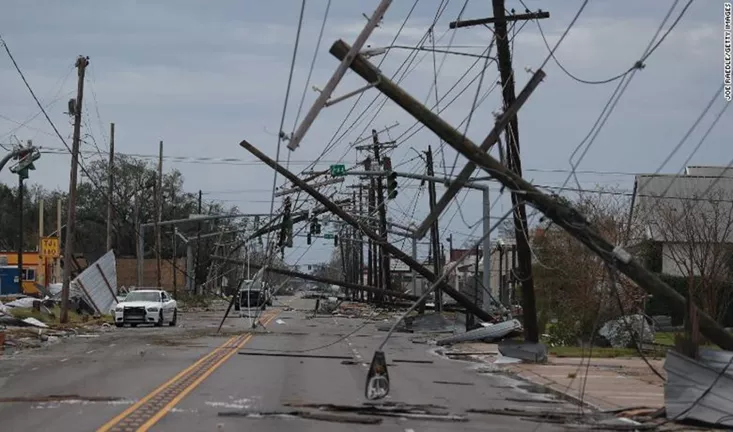
The storm slowly tracks inland towards your branches, dropping more than six feet of water in some areas. The region is affected by severe flooding and damage, including downed power lines, trees blocking roads, and substantial property damage. Local law enforcement has ordered a shelter-in-place and established a curfew until Friday afternoon. Agility is keeping a close eye on the damage to your area and is prepared to deploy equipment as necessary.
Friday, October 7
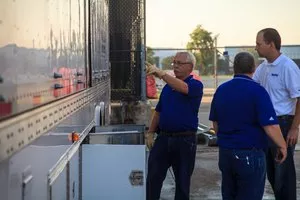
You are granted access to your facility to assess whether you and your employees can return. There is substantial damage, including to computers, servers, telecommunications hardware, and the overall structural safety of your building. You estimate that your facility will not be operational for at least 2-3 months, or potentially even longer due to supply chain issues. You call Agility and have a conversation with your test and declare manager (TDM) and other members of the operations team to determine your needs based on the equipment and facility’s current state. Once the team has vetted your set of needs, Agility provides your recovery quote and timeline for your backup solution. Agility then mobilizes resources to your site to begin your recovery.
Saturday, October 8-Sunday, October 9
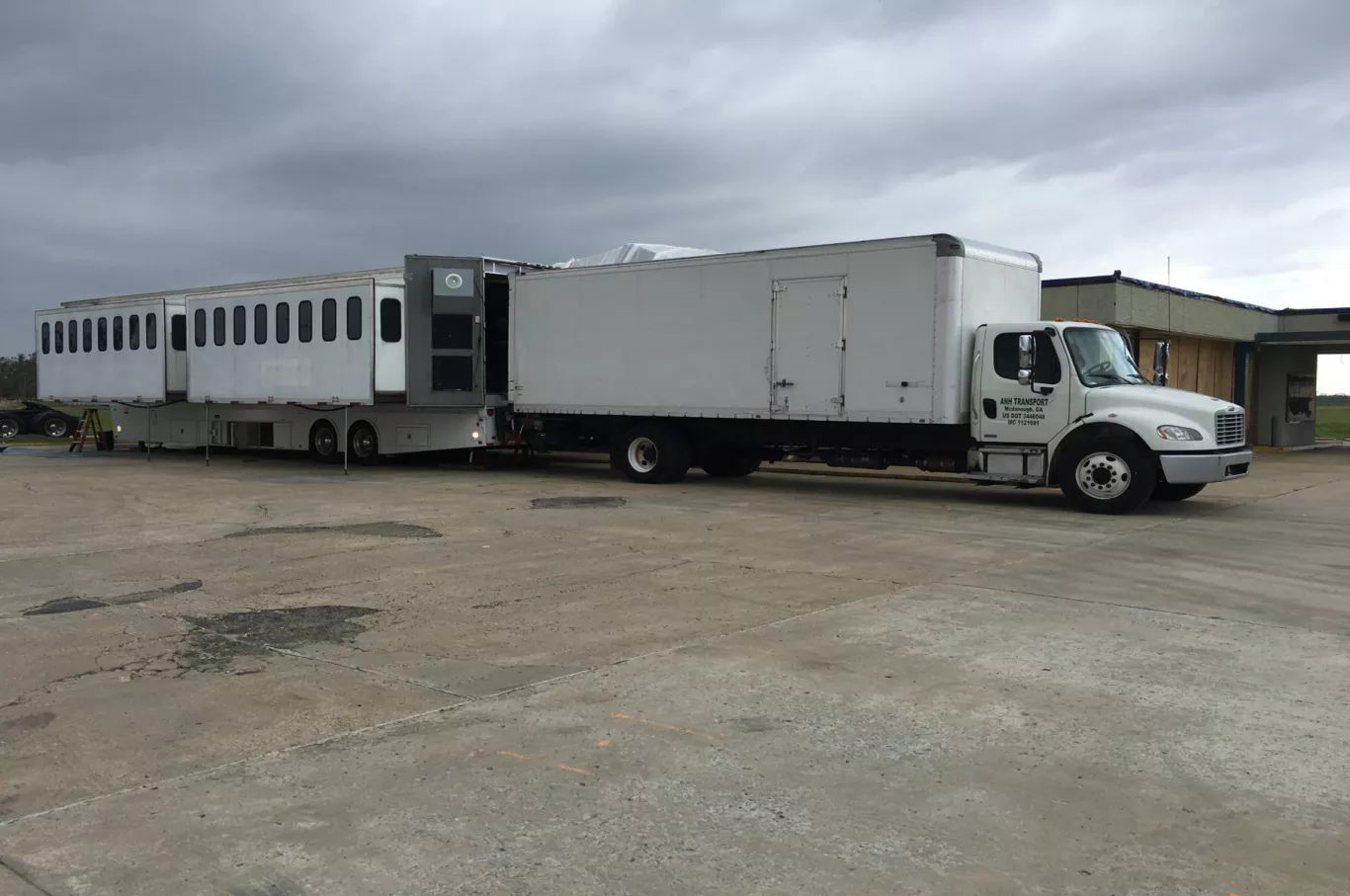
Agility works through the weekend to make sure you and your branch are secure, while you check on the safety of your employees and community and ensure all permitting is ready for your mobile bank unit. Within 48 hours, Agility has deployed a mobile branch unit to your location.
Tuesday, October 11
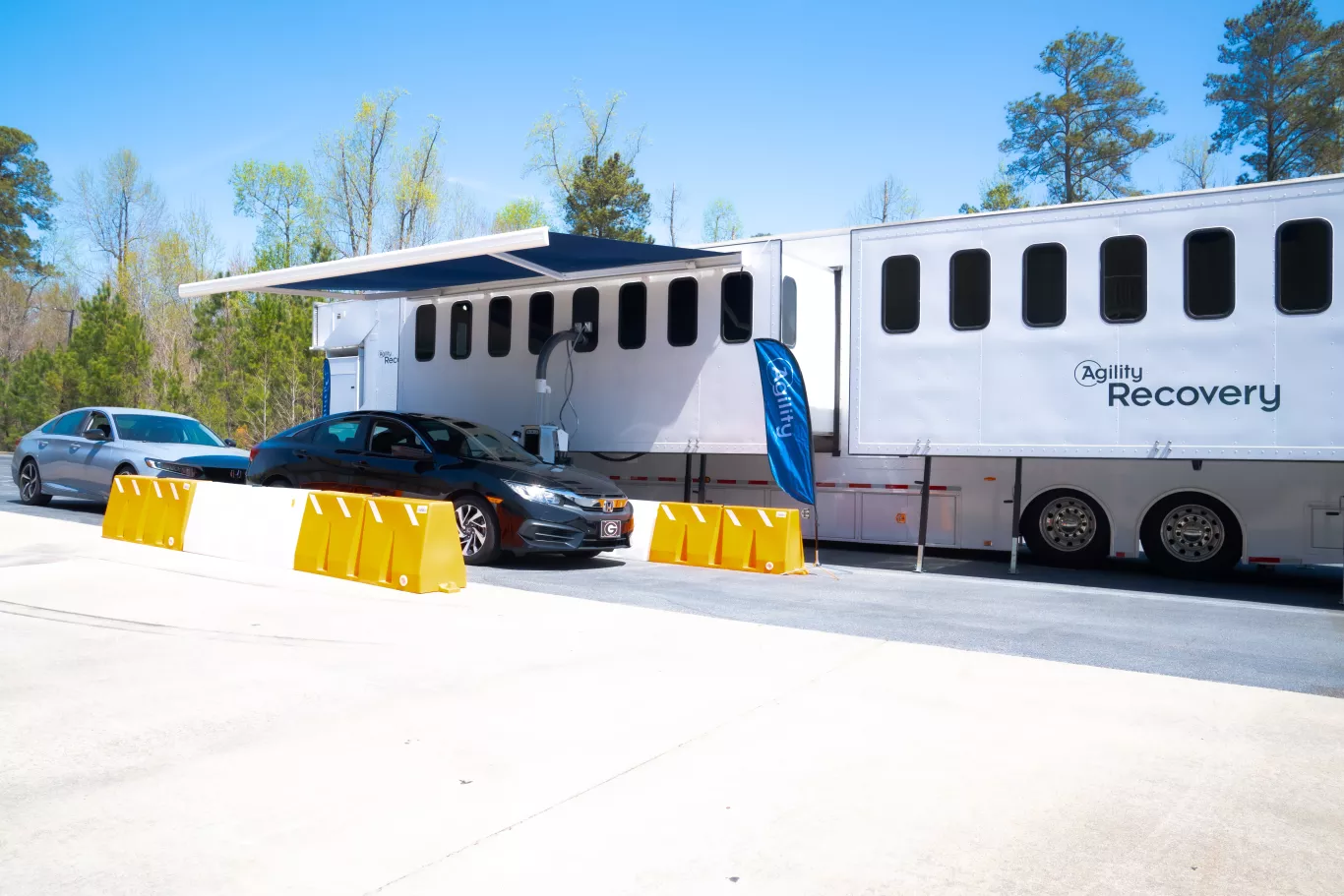
Agility arrives on site with your mobile branch unit, and spends the next 24 hours setting up your remote bank branch, complete with:
- Drive-up window
- Private office space
- Waiting area
- Conference area
- Employee workstations
- Teller stations
- Compliant safe
- Night drop box
- Cash drawers
- Restrooms
- ADA accessibility
- Check-writing stand
- Alarm system
- Satellite and LTE communications
- Computers and printers
Thursday, October 13

Your bank, within the MRC, is now operational. You can assist customers, provide cash advances, and be an overall hub for the community as it recovers from the storm.
Wednesday, February 22
Your brick-and-mortar branch can return to operations after renovations and equipment replacements. Agility returns to pack up the equipment and remove it from your property – no need for you to lift a finger.
Branch Resilience
Over the last 33+ years, Agility has partnered with banks and credit unions to understand your unique business continuity needs and provide tailored recovery services. Our goal is to meet your business challenges and deliver a quick, flexible, and cost-effective solution while keeping you audit ready. Reach out to us today for more information about our purpose-built solutions for the financial industry.