
In honor of National Preparedness Month, I want to thank you for your dedication to our mission of preparedness and resilience. Last year, the National Oceanic and Atmospheric Administration (NOAA) reported 20 weather/climate-related events with losses surpassing $1 billion each, and in 2023, we’ve already seen 23 events this year. These figures highlight the ongoing need for our services, especially as we enter the peak season for severe weather now through November.
The events of Hurricane Idalia served as a reminder that preparedness is not merely seasonal, but a year-round commitment. Our response to this natural disaster exemplifies our core values and the agility we bring to the table when our customers and communities need it most. We worked with nearly 100 customers in the path of Hurricane Idalia, who put our resources on alert for their recovery strategy. During our recovery efforts, we provided resources like fuel and generators to help businesses impacted by the storm. Hurricane Idalia touched the lives of individuals and businesses across a diverse spectrum of industries. Our preparation and response extended into sectors such as:
- – Transportation/infrastructure
- – Healthcare
- – Food and beverage distributors
- – Retail and convenience stores
- – Oil and gas
This breadth of impact emphasizes our role in supporting various organizations during times of need. We learn from these events, adapting our offerings as new threats arise, and are currently working with customers to update their BC/DR programs to make sure they’re prepared for the next inevitable business interruption. Remember, business continuity isn’t limited to natural disasters and physical recovery services. While weather-related occurrences are currently top of mind, business interruptions can take on many forms that may prevent your ability to operate your business effectively. Our Preparis software helps your organization prepare for unexpected interruptions, including cyberattacks, ransomware, active shooter incidents, as well as severe weather. Preparis helps you create, assess, test, and adjust your continuity plan in real-time, making sure everyone in your organization has access to the latest plan. Plus, bi-directional messaging ensures timely communication during critical situations. Having the right continuity software, all in one central console, is essential for a robust preparedness plan. During National Preparedness Month and beyond, I urge you to maintain a constant focus on readiness. Now is the time to review and update your preparedness efforts and recovery plan. Resilience begins with proactive planning. Let us know if you’d like to discuss your preparedness efforts. We are here to support you. Please send us a message if we can be of assistance. Sincerely, Jon Bahl CEO, Agility Recovery & Preparis

As a business professional, it’s important to understand the value of investments and how they can lead to positive returns. Having a plan for backup power is essential in ensuring that your business can withstand any unexpected interruption. Depending on your specific industry, it may also be required by law. This article looks at the research from Hobson & Company and Agility Recovery in order to understand the return on investment, or (ROI), with an investment in backup power solutions.
When it comes to reliable backup power , traditional solutions can be expensive, and difficult to predict when they may be needed. The Department of Energy reports that power outages can have high costs associated with them and can cause waste if they occur in the middle of production. The Department of Energy estimates that outages cost the U.S. economy upwards of $150B annually . Agility Recovery provides a range of flexible deployment options that reduce costs, save time, and provide a tangible ROI. The research from Hobson & Company looks at the costs and risks of traditional solutions, the benefits of Agility Recovery, and how Agility’s solutions can help mitigate risk and control costs. Hobson and Agility have created a simple ROI calculator to see how your specific business can benefit from using Agility Recovery’s suite of continuity solutions.
Cost Savings
Agility Recovery provides a range of cost savings for businesses. This includes capital expenditure on generators, maintenance and testing expenses, and time spent responding to power outages. Customer research conducted by Hobson & Company indicates an 80% reduction in time spent responding to power outages while also avoiding maintenance and testing expenses. A participant in the Hobson report mentioned, “We were looking at buying a generator set to protect us from rolling blackouts due to weather events. They were not only prohibitively expensive at $2.5 – $4M per install but also had excessively long lead times of 1.5 – 2 yrs. We still have to run our business in that time and ensure we are protected from a business continuity perspective, and Agility provided a great solution for us, and we have coverage for all of North America without spending more than $100K/yr.”
Time Savings
Agility provides power, fuel, testing, and electrical connections to businesses in order to reduce costs and mitigate risks. This leads to time savings as businesses are able to respond to power outages more quickly, thereby avoiding costly losses associated with power outages. What does an 80% reduction in time spent look like? In the report, one senior buyer explained in detail. “I learned of a power interruption at one of our facilities in Texas while I was on the safari ride at Disney with my kids. I was literally on the safari ride ordering a generator, and it was so easy to get what I needed, even though I was on vacation. The whole process was very easy and only took about 10 minutes. Without Agility, I would have had to stop what I was doing, figure out who I would get the generator from, and what the cost was going to be. It would have taken me at least 2 hours.” Partnering with Agility will leave the guesswork out of business disruptions and let you do what you do best, serve your clients and your community.
ROI (Return on Investment)
The research conducted by Hobson & Company and Agility Recovery shows that an organization with given specifications could generate a 949% ROI after three years. For a medical device manufacturer with an annual revenue of $1.8B, an investment of $77,000 generated a positive return in less than one month. Depending on your business model and annual revenue, the ROI of Agility’s solutions can be seen almost immediately. Hobson’s research also signaled a 2% reduction in annual insurance premiums. With insurance rates continuing to rise, 2% can mean thousands of dollars saved each month. Partnering with Agility will not only improve your reaction time to a business interruption, but it will also reduce your costs year over year in ways you may not be able to predict.
Mitigating Risk
Agility's backup power solutions can help organizations protect against revenue loss, inventory spoilage, and idle employees. This is because Agility provides power, fuel, testing, and electrical connections to businesses in order to reduce costs and mitigate risks. Agility's solutions can help organizations avoid reputational damage due to late deliveries, canceled orders, and other hiccups that occur with unexpected downtime. In the report, a senior VP of operations stated, “Customer satisfaction and reputational risk are the biggest issues with late deliveries. People want their stuff when they want it. We operate 24 hrs/day, and if we experienced a prolonged outage, it would cost us $2.25M per day.”
Conclusion
This article is just an overview of the research conducted by Hobson & Company and Agility Recovery, focusing on the need for reliable and affordable backup power sources and the impact of Agility's backup power solutions. We’ve looked at the costs and risks of traditional solutions, the benefits of the Agility solution, and how Agility can help mitigate risk and control costs. Can you really put a price on the importance of customer satisfaction and avoiding reputational damage? Ultimately, it is clear that investing in Agility Recovery can help businesses reduce costs, save time, and generate a positive ROI. For more information, or for a breakdown of your organization's potential ROI, click here .
When it comes to businesses that rely on emergency power systems, generator maintenance cannot be overlooked.
Regular maintenance and upkeep of a generator is essential for keeping it in top working condition and ensuring it is ready to go when the need arises. This article will cover the importance of generator maintenance, including the steps involved, common problems that require attention, the benefits of proper maintenance, and why outsourcing to a professional service provider may be a good idea. Learn how Agility simplifies generator maintenance and makes sure your business is always prepared.
Generator Maintenance: Overview
Generator maintenance is critical to keeping businesses that rely on emergency power systems running smoothly. As with any machine, generators need to be regularly inspected, cleaned, and tested to ensure they are ready when needed. Regular maintenance helps ensure generators will work efficiently in an emergency situation and can prevent costly downtime or damage due to malfunction.
Understanding the different types of maintenance tasks required for your generator set is important for ensuring its reliability and performance. The most important tasks include changing the oil or cooling fluid, inspecting filters, lubricating moving parts, testing the battery starter system, cleaning the fuel tank, and checking safety features such as smoke detectors. For businesses that don’t have in-house resources to carry out these tasks themselves, outsourcing generator maintenance to a professional service provider can be beneficial in terms of time, money, and resources.
The benefits of regular generator maintenance are clear: it prevents costly downtime due to unexpected faults, maximizes efficiency by ensuring that all components are working correctly, prolongs the life span of the generator, reduces emissions, meets regulatory compliance requirements, and helps maintain warranty conditions. Taking proactive steps to maintain your generator set also reduces stress during an emergency so you’ll have peace of mind knowing that your system is ready when you need it most.
Finally, hiring a professional service provider for generator maintenance ensures that all tasks are performed correctly according to industry standards. They can provide expertise on how best to maintain your equipment as well as offer timely advice on any potential issues before they arise. This can save money in the long run by avoiding expensive repairs down the line due to negligence or lack of knowledge regarding proper maintenance practices.
Overall, with regular care and attention from a trusted professional service provider, businesses can rest assured knowing their generators are always ready when needed – thus reducing stress during an emergency power outage situation and helping them stay productive even during difficult times.
Steps of Generator Maintenance
Maintaining a generator is important to ensure it is always ready to go when needed. Regular checks of the oil level, air filter, radiator, belts, hoses, clamps, battery charge level and charging system, and wiring should all be performed as part of regular maintenance. In addition to these checks and inspections, testing the generator and fuel can reveal any potential problems before they become major issues.
To test the generator itself, start by running it at full load for at least twenty minutes or longer if possible. This helps identify any weak parts within the system that may need servicing or replacement. Make sure to check for leaks during this process as well; if there are any present, it’s best to address them immediately rather than wait until later when the problem becomes more serious.
After running the generator at full load, reduce its load incrementally until it reaches idle speed and then shut it down completely. Open up the engine compartment and inspect all the components inside to ensure everything is in proper working order before restarting it again. Be sure to check for signs of wear or damage on any of its moving parts, as these can lead to costly repairs in the future if not addressed quickly enough.
Finally, check your fuel source for any contaminants that may have built up over time, such as dirt or debris, that could cause engine failure if left unchecked. If you find anything suspicious, then take measures to remove these contaminants immediately before proceeding with further tests or use of your generator system.
Regularly following these steps will ensure your generator is always in top condition and ready to provide power whenever necessary without interruption or delay. Additionally, you’ll also save yourself both time and money by avoiding costly repairs due to lack of maintenance down the line.
Common Issues That Require Maintenance
Generator maintenance is critical for any business that relies on emergency power systems. When neglected, costly repairs or complete system failure can occur. It's important to be aware of the common problems that require proactive measures to avoid such issues. Clogged fuel filters due to inadequate fuel quality, malfunctioning parts from insufficient lubrication, incorrect voltage regulator settings, and faulty engine speed governor calibration are all typical examples of preventable generator problems. To keep your fuel filter from becoming clogged, it's essential to regularly check the quality of the fuel and replace any contaminated or degraded product immediately. Sufficient lubrication is also key for keeping parts like fans and bearings functioning properly. Checking oil levels and replacing old oil with new should be done regularly as a preventive measure. In addition to these steps, it's also important to ensure that your voltage regulator is set correctly and that the engine speed governor is calibrated appropriately to maintain peak performance during periods of high demand or longer shut-down times. Finally, dirt and debris should be cleared away from around the unit at regular intervals so foreign objects don't get into moving parts like fans or switches, which could cause serious damage if left unchecked. By being mindful of these common generator problems and taking proactive measures, businesses can ensure their backup power system is always ready when they need it most.
Benefits of Proper Maintenance
Having a generator that is well maintained and in optimal condition is essential for businesses that rely on emergency power systems. Regular servicing of these generators can provide numerous benefits, from cost savings to improved reliability and efficiency.
Maintaining your generator helps to reduce unanticipated expenses due to sudden mechanical failure or costly repairs. You can save money in the long run by opting for regular checkups and upkeep. Furthermore, keeping your generator properly maintained minimizes the risk of potential damage to property or personnel due to mechanical issues, as it ensures all safety features are working correctly and compliant with regulations.
Reliability is another key benefit of investing in proper maintenance for your generator. A well-serviced system will supply power whenever needed most – during energy outages caused by extreme weather conditions or other emergencies – helping businesses keep running with little interruption. Regular servicing also prevents parts from wearing out over time or becoming blocked with dirt or debris, which could cause malfunctions when needed the most.
Also, properly maintaining a generator improves efficiency by ensuring every component runs optimally without unnecessarily wasting fuel resources. This means you get more value from each liter of fuel used while maintaining a safe operating environment for people and equipment alike.
By investing in regular maintenance for their generators, companies gain access to reliable backup power while simultaneously reducing repair costs and improving overall performance through increased safety measures, enhanced reliability, and better energy efficiency.
Why Outsourcing Makes Sense for Businesses
Outsourcing generator maintenance to a professional service provider can provide several benefits for businesses that rely on emergency power systems. A knowledgeable and experienced third-party team can help minimize downtime, maximize efficiency, and identify potential problems before they become major issues. Additionally, having a third-party provider for generator maintenance can save time and money as well as provide an expert who can offer timely advice on any issues. One of the major advantages of outsourcing maintenance is that it allows businesses to focus their attention on other aspects of their operations while an experienced provider handles all the day-to-day upkeep required to keep the generator running efficiently. Furthermore, having a dedicated team of professionals who specialize in generator maintenance will ensure all necessary steps are taken to maintain and repair your equipment should something go wrong. Another benefit is that third-party providers often have access to fuel solutions, which allows them to consolidate contracts and vendor reliance. Doing so means you don't have to worry about sourcing fuel from multiple vendors or managing multiple contracts at once.
Ultimately, by taking advantage of these solutions, you can save money in the long run by avoiding unnecessary expenses due to mismanagement or inefficient use of resources.
A reliable and efficient generator is essential for businesses relying on emergency power systems. Outsourcing your generator maintenance needs allows you access expert help quickly when needed so you can be sure your system will always be ready when disaster strikes. Additionally, having a dedicated team of professionals handle regular checkups helps prevent expensive downtime and keeps your generator running smoothly at all times. Reach out to us today to learn how Agility can help your organization keep its generator up and running.
Power outages have always been a threat to business continuity, but in recent years, they have become more frequent and longer. According to analysis by the Associated Press (AP) since 2017, the number of power outages nationwide has doubled compared to the previous six years. This trend is expected to continue, posing a significant risk to businesses of all sizes and sectors. This blog will examine the growing reliance on power for business operations and the strain it puts on an aging power grid, as well as the direct and indirect costs that power loss can have on businesses. Finally, we have some recommendations for businesses to be more prepared for power outages and ensure continuity in the face of this growing threat.
Power Outage? We’ve Got You Covered.
Whether you lose power due to a hurricane, winter storm, or rolling blackout, nothing is more important than restoring operations and enabling critical staff to return to work. Let Agility keep you up and running.
The Growing Reliance on Power for Business Operations
Businesses have become increasingly reliant on power to run their operations. From lighting and HVAC systems to manufacturing equipment and computer networks, power is the lifeblood that keeps the wheels of commerce turning. Without a reliable source of electricity, businesses can quickly grind to a halt, resulting in lost productivity, damaged reputations, and, in some cases, even threats to public safety. The cascading effects of failure on an aging power grid can be significant.
When a power outage occurs, it can disrupt not only the business that directly relies on it but also those that are interconnected through the same grid. For example, if a manufacturing plant experiences a power outage, it may not be able to produce products, which could disrupt the supply chain for other businesses that rely on those products. Similarly, if a hospital loses power, it may not be able to provide critical care, putting patients’ lives at risk. The financial losses caused by power outages can also be significant. A power outage can result in lost revenue, increased operating costs, and reduced profitability for businesses that rely on power to produce and sell goods. In extreme cases, power outages can even lead to bankruptcy or closure of the business.
The Changing Landscape of Power Generation and Distribution
The current state of power generation and distribution in the world is a mix of different energy sources and the infrastructure that supports them. Coal, natural gas, nuclear, hydroelectric, and renewable sources such as solar and wind all contribute to the global energy mix. However, the infrastructure supporting power generation and distribution is aging, which presents significant challenges to the industry. Many power plants and transmission lines were built decades ago and are reaching the end of their useful life. The cost of upgrading or replacing this infrastructure is substantial, and the investment required can deter some utility companies.
Cybersecurity threats are another major challenge for the power industry. Power generation and distribution systems are becoming increasingly digitized and connected, which makes them vulnerable to cyberattacks. A successful attack on a power grid could have catastrophic consequences, including power outages and system failures that could impact entire regions or even countries.
Natural disasters such as hurricanes, earthquakes, and wildfires are also a challenge for power generation and distribution. These events can damage power plants and fuel supplies. When natural disasters strike, the impact on power availability can be severe, and recovery can be slow. A power outage can disrupt supply chains, damage equipment, and lead to lost productivity. It can damage a company’s reputation and lead to lost revenue, and in extreme cases, power outages can threaten public safety.
The Importance of Power Protection and Backup Solutions
Given the significant financial losses and reputational damage that can result from power outages, businesses must have power protection and backup solutions in place. These solutions can help ensure continuity in the face of power disruptions and enable businesses to maintain their operations and minimize losses. One of the most common types of power protection and backup solutions is a backup generator. Backup generators are designed to provide power automatically when a power outage occurs. Backup generators are often used by businesses that need to maintain power for critical operational systems like hospitals or manufacturing plants. In addition to backup power solutions, businesses can also invest in technology to ensure internet connection during power outages.
A technology solution like Agility’s on-demand technology can provide businesses with backup resources and an internet connection that does not rely on a traditional wired connection. This can help businesses maintain their operations and communication channels even when the power is out. Overall, power protection and backup solutions are critical for businesses to ensure continuity in the face of power outages. These solutions can minimize the risk of financial losses and reputational damage and help businesses maintain their operations during challenging times.
Recommendations to Mitigate Damages from Power Loss
Power loss poses one of the greatest threats to business continuity in 2023. Businesses have become increasingly reliant on power to run their operations, and a power outage can cause significant financial losses and reputational damage. With challenges facing the power industry, including the aging infrastructure, cybersecurity threats, and natural disasters, it is critical to be prepared for an extended outage. To mitigate the risk of power outages, businesses should invest in power protection and backup solutions. Solutions, such as backup generators, mobile workspace, and cellular failover technology, can help ensure continuity in the face of power disruptions.
We recommend that businesses test their backup power plan and equipment regularly, prioritize recovery for mission-critical operations, develop alternative continuity strategies for remote functions, and secure assured vendor support prior to an interruption. Creating diversified access to resources when possible will help businesses avoid both supply chain and infrastructure-related delays and ensure all vendor contracts meet their current RTO. By implementing these recommendations, businesses can improve their resilience to power outages and minimize the risk of financial losses and reputational damage. In this age of increasing power disruption, it is critical for businesses to be prepared and take proactive measures to ensure their continuity in the face of power loss.
The Atlantic hurricane season started quietly but roared in with Hurricane Ian at the end of September.
The Category 4 storm tore through Florida, South Carolina, and North Carolina, affecting nearly 400 Agility customers. Hurricane Ian was the deadliest hurricane to strike the state of Florida since the 1935 Labor Day Hurricane, taking the lives of more than 100 people, leaving 2.5 million homes and businesses without power, and causing more than $50 billion in damage. About one week in advance of landfall, the Agility Recovery Services team begin proactively providing outreach to both customers and vendors in Florida. Ultimately, about 75% of the recoveries we provided were related to power; Agility also deployed two mobile workspace recovery centers (MRCs) on the heavily damaged Pine and Sanibel Islands.
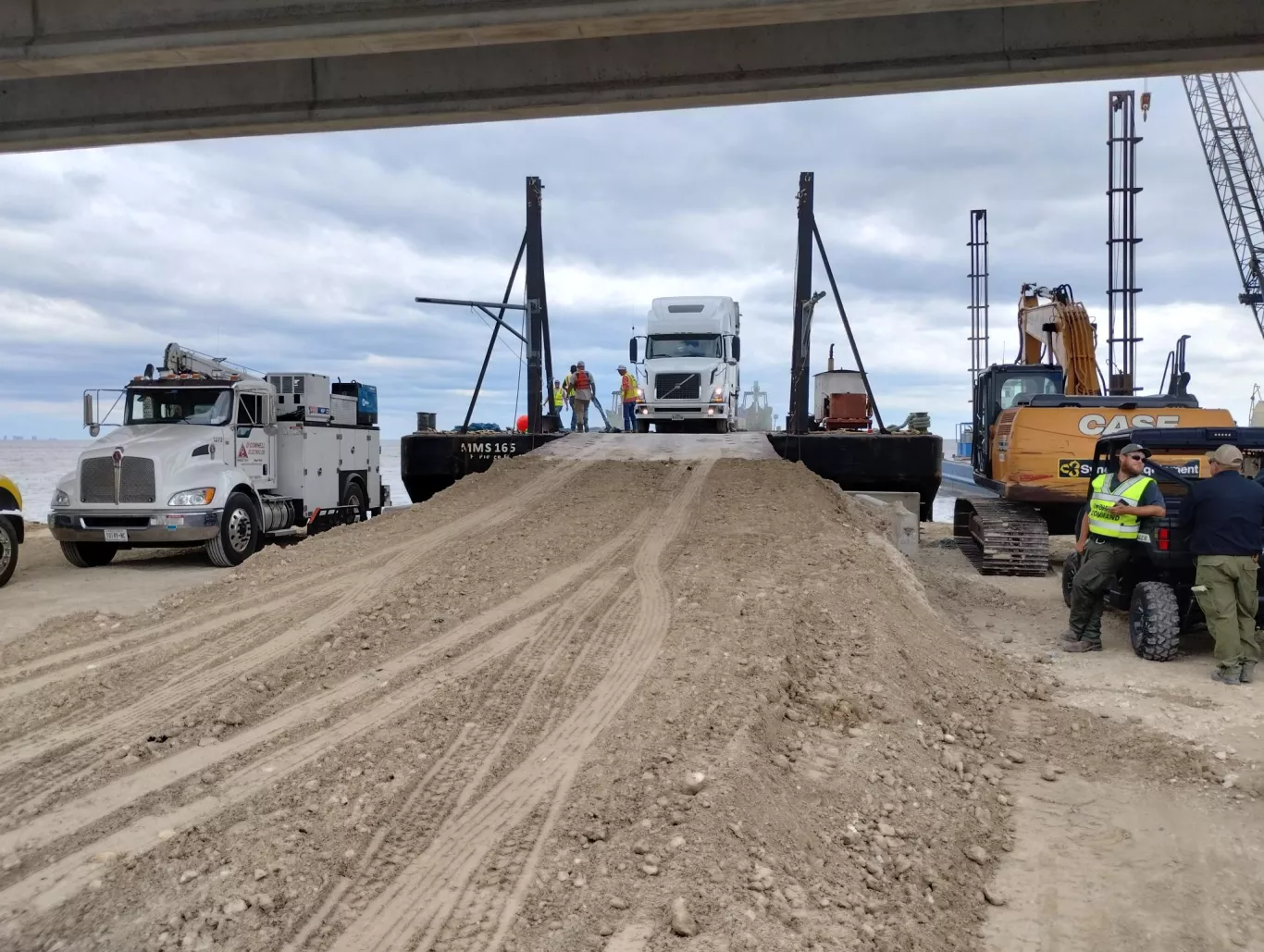
While mobile recoveries are common after hurricanes, these deployments had a unique twist. To get to Sanibel Island, Agility had to coordinate with Lee County to load the MRC onto a barge to access the recovery site, as the Sanibel Causeway between the mainland and the island sustained too much damage to be drivable. The barge was so large that it could hold 15,000 tons and required additional sand to be poured to make the ground and gangplank level for the MRC. This was the first time Agility had transported a recovery center via barge during a recovery. The customer was impressed and comforted by having the Agility team on site to coordinate and manage the setup.
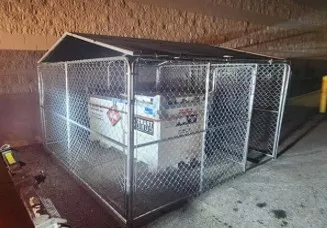
Over the course of the storm and recovery, Agility not only leveraged current solutions but also created a fresh resource for customers: ReadyTank+. This solution helped provide customers’ employees with safe access to gasoline to fuel their cars and continue operations. Deploying ReadyTank+ included setting up a security fence around the fuel pod and light towers to keep the area well lit and safe. ReadyTank+ is just one more example of how we strive to identify what our customers truly need and think outside the box to create solutions to solve those unique recovery challenges. I personally want to thank our recovery services operations teams. While the logistics, operations, technical services, and test and declare teams worked around the clock to recover our customers, they also continued to manage full caseloads of tests without skipping a beat. I’m extremely honored to call these individuals part of the Agility team. Thank you. Though this storm was a harsh reminder of the threat natural disasters pose to all of us, it was also an inspiring example of the power of resilience. We are proud to continue in our mission to help businesses and their communities recover from any interruption.
Regards,
Jon Bahl
CEO, Agility Recovery

Facing a natural disaster that could impact your bank or credit union is daunting. Here’s what you can expect when you work with Agility on a post-disaster recovery.
Monday, October 3
The National Weather Service has issued a statement that an approaching tropical storm has the potential to turn into a hurricane, with landfall on the Louisiana coastline predicted in three days. Several states, including your bank’s home of Louisiana, have been put under a hurricane watch. The storm is estimated to have 150 mph winds and may drop more than three feet of water upon landfall. Due to the likelihood that the hurricane will affect at least one of your bank branch locations, you call Agility and put your company on alert status. Agility talks through costs and benefits of viable solutions should you need to declare and puts equipment and personnel on standby.
Wednesday, October 5
The National Weather Service predicts landfall as a category 4 or 5 hurricane within 36 hours, and Louisiana has been placed under a hurricane warning. The area is facing mandatory evacuations.
Thursday, October 6
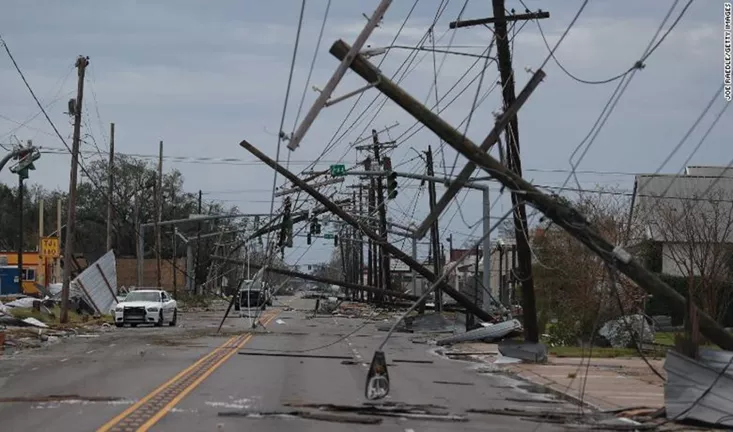
The storm slowly tracks inland towards your branches, dropping more than six feet of water in some areas. The region is affected by severe flooding and damage, including downed power lines, trees blocking roads, and substantial property damage. Local law enforcement has ordered a shelter-in-place and established a curfew until Friday afternoon. Agility is keeping a close eye on the damage to your area and is prepared to deploy equipment as necessary.
Friday, October 7
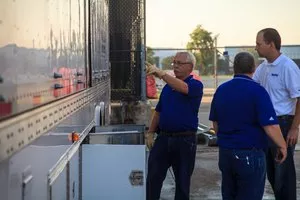
You are granted access to your facility to assess whether you and your employees can return. There is substantial damage, including to computers, servers, telecommunications hardware , and the overall structural safety of your building. You estimate that your facility will not be operational for at least 2-3 months, or potentially even longer due to supply chain issues . You call Agility and have a conversation with your test and declare manager (TDM) and other members of the operations team to determine your needs based on the equipment and facility’s current state. Once the team has vetted your set of needs, Agility provides your recovery quote and timeline for your backup solution. Agility then mobilizes resources to your site to begin your recovery.
Saturday, October 8-Sunday, October 9
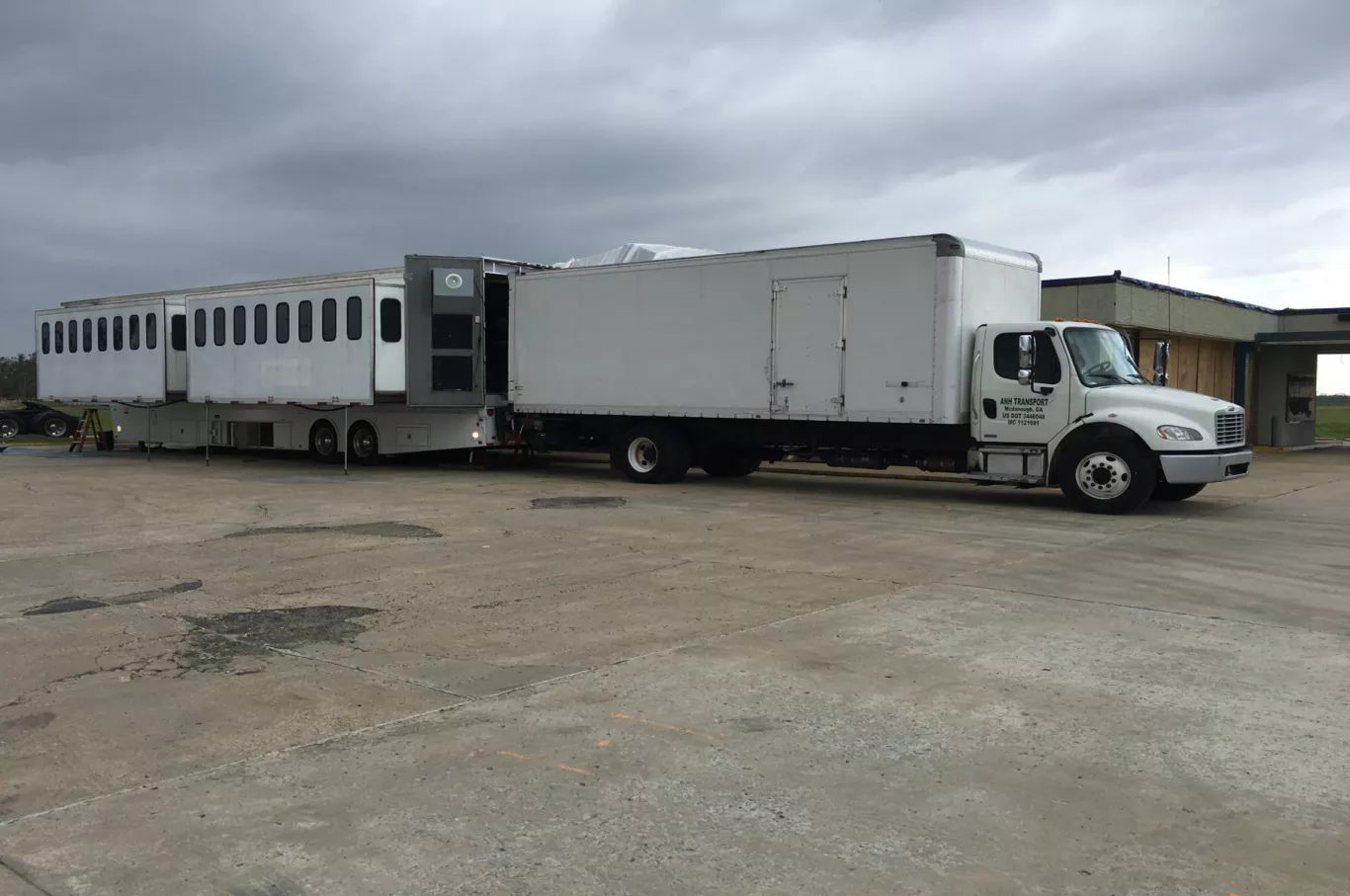
Agility works through the weekend to make sure you and your branch are secure, while you check on the safety of your employees and community and ensure all permitting is ready for your mobile bank unit. Within 48 hours, Agility has deployed a mobile branch unit to your location.
Tuesday, October 11
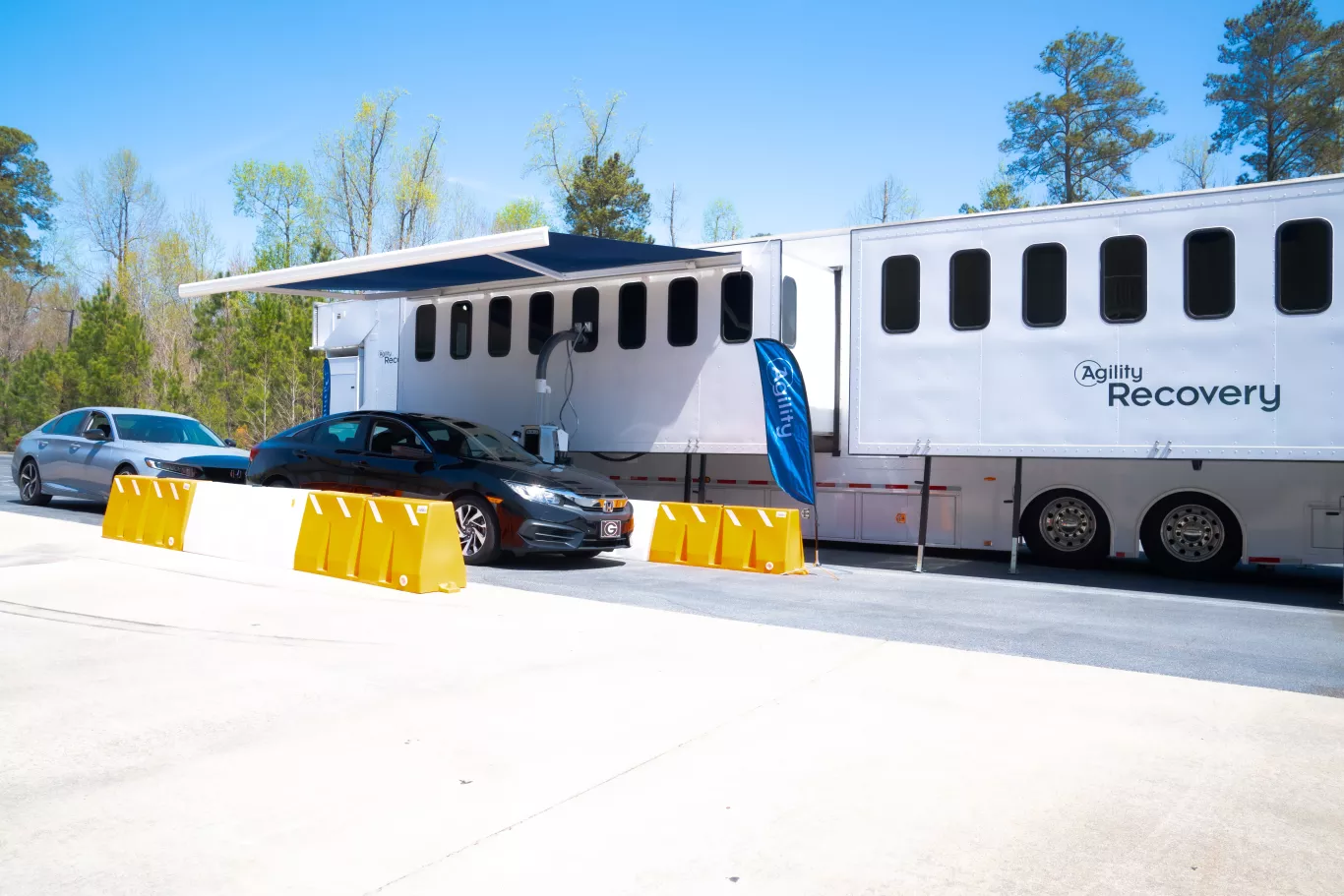
Agility arrives on site with your mobile branch unit, and spends the next 24 hours setting up your remote bank branch, complete with:
- Drive-up window
- Private office space
- Waiting area
- Conference area
- Employee workstations
- Teller stations
- Compliant safe
- Night drop box
- Cash drawers
- Restrooms
- ADA accessibility
- Check-writing stand
- Alarm system
- Satellite and LTE communications
- Computers and printers
Thursday, October 13

Your bank, within the MRC, is now operational. You can assist customers, provide cash advances, and be an overall hub for the community as it recovers from the storm.
Wednesday, February 22
Your brick-and-mortar branch can return to operations after renovations and equipment replacements. Agility returns to pack up the equipment and remove it from your property – no need for you to lift a finger.
Branch Resilience
Over the last 33+ years, Agility has partnered with banks and credit unions to understand your unique business continuity needs and provide tailored recovery services. Our goal is to meet your business challenges and deliver a quick, flexible, and cost-effective solution while keeping you audit ready. Reach out to us today for more information about our purpose-built solutions for the financial industry.
Did you know that the United States experiences the most power outages ? Compared to other developed nations, the U.S. experiences more extensive and severe power outages that can leave people without electricity for an average of four hours; many of these outages result from severe spring weather. Power outages aren't the only impact spring can have on the weather. High risks for flooding and storm damage can harm your business, consumers, and employees. How can you prepare for severe weather this spring? We have put together a complete guide on how you can start prepping now for upcoming weather, so keep reading for more information!
How Severe Weather Affects Businesses
Business continuity starts with expecting the unexpected. Weather can drastically impede how your business functions and, in return, how it performs. Here are a few ways that severe weather hurts your business :
- – Customer habits
- – Prices
- – Employee performance
- – Property
Customers change their habits based on the weather, and you should closely analyze how your business does quarterly for a better idea of how weather plays a role. You might notice an increase in consumer traffic or purchases during certain months, which can affect your staffing and business operations. Price fluctuations and weather can go hand-in-hand. For example, poor weather or winter months can increase oil demand and prices, and agricultural businesses rely heavily on weather patterns that affect crop yield. Employee performance can also tie into the weather since bad weather could affect an employee's ability to get to work or finish a project promptly. Luckily, remote work has helped lessen the effects of poor work performance if your business can adopt flexibility. Lastly, storm damage can directly result in business property damage. Your business's property includes both IT and physical property. Storms can cause power outages and lost data, which is critical for companies requiring 24/7 online support. When your house loses power, you can sit back, light some candles, and enjoy each other's company. With your business, even hours of being down can result in significant losses in revenue.
Spring Predictions
On March 20th, the shift into spring officially begins. What can you expect for spring weather this year? For many, spring weather isn't necessarily something to look forward to when trying to keep a business flourishing. In Southern and Western states and parts of the Midwest, we can expect higher than average rainfall, increasing the chances of flooding . Warmer-than-average weather can draw more people outside and increase online or in-person traffic to your business. Start preparing now for flood and storm damage by ensuring that you have a business continuity plan in place.
Physical Recovery
Physical recovery is relatively straightforward and can help your business recover from power outages, natural disasters, and more. Approximately 40% of businesses who experience power outages never reopen, so don't let that be you! If your business is physically compromised, you have a few options:
- – Backup tech equipment
- – Office space
- – Backup generators
- – Maintaining networks
Spring weather can act similar to the hurricane season with unrelenting winds, rain, and floods. Be sure your business is ready by checking in on these five key business points:
- – Employees and customers
- – Property
- – Processes
- – Products
- – Partners
Ensure your property is physically secure and that your files are safely backed up . Confirm continuity plans and emergency action with your partners and employees so that everyone is on the same page. Lastly, keep tabs on your products and manage customer expectations when preparing for storms this spring.
Remote Work
A business continuity plan can include remote work or options to work from other offices. Look for products like ReadyTechGo technology , which provides:
- – 40 hours of battery life
- – Cellular connectivity
- – WiFi set-up
- – 24/7 technical support
- – Portability (e.g., water-resistant, lightweight)
- – Flexible shipping
It's the ultimate emergency tool to have on hand that can keep your business up and running this spring, useful for critical workers or accessing necessary business documents.
Data Recovery Importance
What is the importance of quick data recovery ? Backing up your data in a cloud or through other means ensures your business is back online within hours versus days or weeks. Small- to medium-sized businesses can benefit from the added cost of data recovery services since minor hiccups can lead to permanent shutdowns or loss of revenue.
Keep Your Business Running This Spring
Is your business ready this spring? Spring weather can bring flooding and storm damage to your business. Not only can you physically not make it into work, but you could experience downed power lines and data crashes. Luckily, you have plenty of time to start developing emergency plans for your business that help you tackle any problem thrown your way. For business continuity testing and recovery solutions, contact us today and let Agility Recovery help you get started.
Whether or not your business has been impacted by power loss in the past, preparing for fast power restoration is an absolute foundation in business sustainability. On average, losing power for just four hours costs an organization between $10,000 to $20,000 , so the question is no longer whether companies can afford planning and recovery, but instead, how much will a business save by investing in a comprehensive business continuity plan that includes power restoration support? Your company’s safety, productivity, and revenue should never be left vulnerable to power loss. An effective power recovery plan includes strategies to address many contingencies. To do this, planners must avoid outdated power recovery myths and consider these critical facts:
Myth #1: Local vendors will be able to assist in the event of a major outage.
Fact: Without a formal agreement that includes guaranteed access to generators, fuel, and connection services, local vendors may allocate their inventory to larger organizations. We recently supported a small business that believed their agreement with a local provider was all they needed to secure a backup power solution. Unfortunately, as storms took out critical lines throughout their community, the provider was approached by a larger corporation that needed all available generator inventory to support its various locations. Because the small business lacked buying power compared to their enterprise-sized competition, the vendor canceled their agreement with the small business to serve a larger customer with a bigger budget. Fortunately, Agility was able to step in and quickly source, service, and connect a generator for this small business. Otherwise, the vendor’s questionable business practices could have meant a critical loss of revenue and reputation for the small business. While it may seem safe to assume that what you need will be available when you need it, unpredictable storm seasons, supply chain issues, and inflated demand lead to severe resource scarcity and price gouging. When local availability is compromised, this could cost you days, weeks – or even longer – of downtime. If we’ve learned anything from disasters like Hurricanes Harvey and Ida, 9/11, and the initial panic of the COVID pandemic, local fuel scarcity can cause incredible delays and increases in the cost of recovery. Unless you manage a large fuel storage unit on site, your power recovery plan must include quick access to the kind of fuel you need to operate your business’s gasoline- and diesel-dependent equipment. Lesson: While Agility guarantees rapid deployment of power recovery assets to all contracted customers, many providers do not offer this promise. Be sure to get your power recovery agreement in writing and review contracts for clauses that allow vendors to prioritize larger customers. When securing power recovery assets, be sure to include a plan for quick delivery of fuel to keep your generators , vehicles, and other equipment operational.
Myth: Buying our own generator will provide our company with the best value and fastest power recovery.
Fact: The initial investment you make in a generator is just that – initial. Cost over time will only increase as the reliability of your unit inevitably decreases. The investment made when a generator is purchased is only the beginning. Several factors significantly increase the total cost of a backup generator over time, including:
- Delivery and connection fees
- Ongoing maintenance
- Storage
- Training and testing
- Fuel
- Repairs
Even regularly serviced generators and other power recovery resources are vulnerable to damage caused by severe storms and other natural disasters. If your power restoration plan is entirely dependent on an on-site generator, you need to ensure that you have a reliable backup plan for your backup plan. Lesson: Purchasing one or more backup generators may seem like an easy, cost-effective solution, but power equipment requires regular maintenance, servicing, and fuel, which could drive costs up year-over-year compared to securing power recovery services with fixed, pre-negotiated rates. And when an unexpected storm or disaster causes a major outage, there’s no guarantee that on-site generators and fuel won’t be impacted, too. An effective power restoration plan accounts for these contingencies and includes assured alternative access to generators, fuel, and licensed electrical support.
Myth: Storm-related outages haven’t impacted our business before, so we don’t need to invest in a power recovery plan.
Fact: Historically, storm-prone regions are no longer the only parts of North America where storms cause significant power outages. In addition to storm-related outages, non-weather-related power loss is also rising. In recent years, some of the most damaging storms have been completely unseasonable and largely unpredictable. Lack of preparedness for these events – including the 2021 Texas ice storm – has resulted in critical community damage, economic loss, and permanent business closures. The United States’ aging power grid means that storm-related power outages are more of a threat to all regions and that non-weather-related outages are a growing threat every business should be prepared for. Common non-weather power outages are caused by various disruptions, including vehicles/accidents, animals, vandalism, trees, cyberattacks , and planned outages . Combined with a power grid in desperate need of an overhaul, these events are linked to more frequent, longer-lasting outages . Lesson: Unseasonable and unpredictable storms will increase in regions not traditionally impacted by severe weather. As the threat of non-weather-related outages grows across North America, businesses everywhere are vulnerable to revenue and productivity impacts caused by power loss. An effective recovery plan with services that include access to generators, fuel, connection, and testing will return thousands over the program’s cost after only one power-loss event.
Unlike hurricanes or tornadoes , earthquakes don't occur at predictable times or in predictable patterns. Earthquakes rarely give any warning, which is why they present such a challenge to preparedness. One earthquake doesn't cause much damage, but large earthquakes can cause widespread destruction and loss of life. Any organization's emergency plan should consider how to protect employees, assets, and business continuity. In this article, you'll learn the best ways to prepare for the unexpected and keep your business intact.
Preparing Your Company for an Earthquake
Earthquakes are one of the most significant threats to business continuity, with devastating effects on companies, employees, and customers. Earthquakes occur in remote, high-risk areas with few or no warning systems, making them nearly impossible to predict. In the aftermath of an earthquake , employees are often left without access to their offices, computers, or other critical infrastructure they need for their jobs. Moreover, disasters often disrupt transportation networks, telecommunications lines, electricity grids, and water and sewer systems, making it difficult for employees to get to work. You can reduce the potential impact of an earthquake on your business by ensuring that you have an emergency plan and conducting regular earthquake preparedness drills. This enables you to assess your workplace's vulnerabilities and plan for potential disruptions, which can reduce the chances of injury and damage.
Establish an Emergency Plan
You should establish your company's emergency plan ahead of time. In addition to routinely training employees on what to do during an emergency, you should encourage all the key stakeholders in your company to participate in an emergency training exercise. You and the key stakeholders should also establish an alternate worksite if possible. In a natural disaster, your employees will appreciate the level of preparation you put into a disaster plan.
Design Your Company’s Emergency Plan With the Following
- – In the event of an earthquake, it is essential to establish a designated emergency area outside of the workplace. Ideally, the location should be open-air and free of other buildings or power lines. Make sure that your employees are aware of the site of the designated emergency area.
- – After evacuation, designate one or more individuals to conduct a roll call of employees, depending on the size of your company.
- – Having teams handle basic first aid, search and rescue, fire and evacuation, damage assessment, and security is an excellent way to involve your employees in the process.
Prepare Disaster Supply Kits
You can also mitigate your employees' injury rate if you have a disaster supply kit on hand after an earthquake. During a time of any disaster, you may lack access to food, water, and information, for some time. A disaster supply kit at your workplace needs to contain, at the very least, the following:
- – Bottled water
- – Hand-crank or battery-powered radio
- – Additional batteries
- – Emergency first aid kit
- – Emergency whistle
- – Local maps with information about the nearest hospital and police station
- – Chargers and backup batteries (or power banks) for cell phones
- – Pain relievers and other non-prescription medications
Develop a Business Continuity Plan (BCP) and an Emergency Action Plan (EAP)
Business continuity plans and emergency action plans are essential components of every business. BCPs ensure that a company's ability to respond to and recover from the unexpected is protected and minimizes downtime for the organization. Your employees need an EAP in case of an emergency to know what to do. Getting expert assistance can be an excellent way to build a fully actionable EAP and BCP for business owners without the time or expertise to do so themselves. The best way to determine whether your plan will effectively protect your organization is to partner with Agility’s expert business continuity testing team to develop a testing protocol tailored to your unique needs. Both weather and technology failures can account for power outages. Business owners should prepare businesses to support their productivity even when faced with a power outage and consider a backup plan that includes additional computer equipment , an emergency power supply like a generator , or a portable power and connection pack like ReadyTechGo .
Store Information Remotely
Businesses should have all critical company information, including client data, work orders, contracts, intellectual property, marketing information, and other sensitive materials, safely stored in the cloud if an unexpected disaster hits. Businesses should also have critical business data, like employee training records, sales records, and financial statements, on a remote server. Having the valuable materials mentioned above will enable your company to do business still while handling the aftermath.
Prepare Your Employees to Deal with Emergencies with Training and an Emergency Messaging System
As a result of a natural disaster, time is essential, and you must take action immediately. A person may become overwhelmed in a moment of crisis and freeze up when they should be acting quickly. Organizations that are likely to be affected by natural disasters should prioritize preparing their employees to respond to natural disasters such as hurricanes or power outages.
Importance of Earthquake Awareness
Earthquakes can cause significant disruption for businesses and their employees. Employees who are knowledgeable and prepared for earthquakes are safer and less likely to become seriously injured. Companies that establish an emergency preparedness plan are more likely to recover from the aftermath of an earthquake. Contact Agility today to strengthen your resilience against earthquakes and other disasters.
While most of us are used to the idea of reliable constant electrical energy, the reality is that it can be one tenuous string. In many parts of the country, storms, deep freezes, snow, and other natural disasters can rapidly cut regional electricity for hours or even days. Furthermore, even if your business is located in a reasonably weather-stable area, there’s always the possibility of freak accidents, human error, or planned outages. The reality is that there’s no way to be sure about the constant reliability of any externally derived electrical source. For businesses and organizations of many kinds, a loss of electricity can be catastrophic, even if it lasts for just a few minutes; a multi-day electrical shortage can cause financial, data, and logistical effects on any organization. Just how costly can these events be? Research estimates indicate that power outages cost U.S businesses more than $27 billion per year, and the cost trend is growing upwards, not downwards. You need to protect yourself and maintain business continuity, and the one surefire way to do that is by maintaining your own internal backup power supply, ideally, one that’s capable of keeping the lights on and your systems running for several days or longer if needed. This guide explains the five crucial things you need to consider for achieving just this sort of secure redundancy.
Maintain a Robust Portable Generator
Depending on the size of your business installations and power needs, your quickest, best, and most useful source of emergency electrical power will be a compact portable generator that you keep on standby. These can be bought in almost any hardware store, and larger, truck-mounted models are capable of supplying electricity for days. The critical thing to keep in mind for these generators is to buy and have them ready before the next power outage occurs. Once disaster strikes, retailers tend to run out of items like generators of any kind rapidly (as we saw during recent hurricanes and wildfires), and even fuel can rapidly become scarce. For these reasons, you should have your portable generator ready well in advance, have it inspected regularly, and always keep it fully fueled, or contract with a company that guarantees this preparation.
Maintain Long-Term Standby Generators
While portable generators are a rapid and often highly affordable solution to power outages, they’re far from appropriate for all situations or power needs. Furthermore, many of them require you to plug equipment directly into them and turn them on manually. All of these measures will take time and can cause unexpected problems. A standby generator is an even more robust solution for emergency power. These power systems work much like portable generators but do so on a larger scale. They’re also crucially different in that they’re installed directly into your organization’s internal electrical system so that they can kick into gear as soon as the power goes out. Standby generators tend to be much costlier to buy, install, maintain and often require permits for their specialized installation, which is why we recommend partnering with a company that takes care of this for you and minimizes the chances of a supply shortage. With all that in mind, if your business needs genuinely robust, long-lasting emergency electricity, these devices are an extremely effective option.
Ensure Uninterruptible Power Supplies (UPS)
Even with the best standby generators waiting to kick into gear automatically, most grid power failures will mean at least a few seconds or minutes of zero electricity for your facilities and equipment. This isn’t a problem for many businesses, but if you have time-critical computer systems running, even a single moment of electrical loss can mean enormously costly data losses. There are also susceptible electronic devices running in some facilities, which cannot be suddenly shut down without the risk of damage. For these contexts, you should also invest in what are called Uninterruptible Power Supplies, or UPS devices. These are generally inexpensive and can integrate with your existing emergency power systems to provide those few crucial minutes of continuous electricity when the power grid dies and your alternative power system kicks into life.
Work Towards Long-Term Alternative Power Sources
While generators and continuous power supply systems are superbly helpful for most business needs, your best bet for secure long-term electrical power will be to switch over to alternative renewable electrical sources if at all possible. By these, we’re referring to systems such as roof-top solar power arrays, wind energy devices on your property, or possibly even other sources of ultra-localized, consistent, and renewable electricity. Your transition to your own renewables doesn’t need to be total. As a middle choice, it’s possible to invest in them for the sake of crucial systems power provision. This way, you’ll have peace of mind knowing that even if the general grid goes down, the most critical part of your electrical needs was never relying on it in the first place. Your own renewable power sources, combined with emergency generators in the case of extreme emergencies, should make your organization all but impervious to even the worst power cuts.
Further Solutions for Reducing the Effects of Power Outages
Ensuring a robust and continuous supply of emergency energy is a powerful tool against disaster in almost any context. Still, there are also ways to lighten your possible harm if your electrical systems fail. Keep some of these tips in mind for achieving this: Minimal perishable inventory: If you’re in a business that involves highly perishable products that are only kept fresh with constant electrical resources, work to keep a reduced inventory that will minimize your losses in the event of an energy cut. External cloud solutions: If your company depends on a heavy dose of software and data storage to function, one solution is to invest heavily in cloud-based data backup and business-data management systems. By having these active in the background at all times, power losses don’t need to become data losses, and you might even be able to rapidly relocate your business functions to a place where electricity still works. You can then reconnect with your cloud provider accounts. Emergency response exercises: When the power goes out, and especially if it does so in the middle of a general emergency, you should have your staff trained on handling all the needed tasks for activating generators, saving data, and saving crucial capital assets or inventory. This means training them beforehand and ensuring that the training has been internalized.
Seek Professional Help and Installation
Setting up a truly robust, professionally installed recovery protocol for power outages can be a complicated task, and choosing to do so yourself can open your organization up to vulnerabilities and high costs. This applies especially if your business is more complex or has unique needs. For these situations and in any context in which you need emergency power sources, calling in professional assistance for your power backup needs is an ideal choice that will save you time, money, and stress. Agility experts can help and have the tools for a robust backup energy system for your business.