Why Agility Recovery Services Beat Storing Fuel and Generators
Read more
Keeping your business running during a power outage requires backup power equipment, a secured fuel supply, and a documented activation process connected to your broader business continuity plan. Businesses with pre-contracted backup power solutions can typically restore critical operations within hours; those without one are competing for scarce equipment and fuel during the same regional emergency everyone else is dealing with.
Power outages used to be a regional inconvenience, just something that happened during hurricanes in the Gulf or ice storms in the Northeast. That’s not the case anymore. Outages are hitting harder, lasting longer, and spreading into parts of the country that haven’t historically had to deal with them. For businesses, the question is less if the power goes out and more how long can you afford to be down when it does.
Backup power for business continuity isn’t just a generator sitting in a parking lot. Done right, it’s a coordinated plan: the right equipment, the right fuel supply, and a deployment process that gets you operational before the losses start stacking up.
This article covers what’s driving the increase in outages, what a real backup power solution looks like, and how to make sure your business isn’t figuring it out for the first time during an actual emergency.
The grid was built for a different era. Most of the infrastructure in place today was designed in the 1950s and 60s before the current load demands of electric vehicles, data centers, and AI-powered systems that run 24/7. Meanwhile, the threats coming at it have grown more frequent and more severe.
Severe storms, hurricanes, and wildfires have always caused outages, but the scale has shifted. According to the U.S. Department of Energy, weather-related outages have more than doubled since 2003. What used to be a once-a-decade event for many regions is now an annual reality.
Grid failures during extreme heat events happen for two reasons at once: Demand spikes as everyone runs their AC at full capacity, and transmission infrastructure operates less efficiently at high temperatures. The summers of 2023 and 2024 saw widespread stress events across the southern and western U.S. This is expected to worsen (IEA 2026 Energy Crisis Policy Response Tracker).
The energy mix powering the grid is shifting: more renewables, less coal, and more dependence on natural gas for peak demand, which introduces supply chain variables that don’t exist when infrastructure is simpler. During periods of high demand or supply disruption, that complexity shows up as outages (NERC/North American Electric Reliability Corporation, January 2026).
According to J.D. Power, roughly 53% of power outages in 2025 were caused by non-weather events like aging equipment failures, animals, accidents, cyberattacks, and planned shutoffs like California’s Public Safety Power Shutoffs (PSPSs). These are harder to predict and just as damaging to operations.
The practical takeaway: Your business probably can’t rely on “it hasn’t happened here before” as a planning assumption anymore.
There’s a common misconception that backup power just means having a generator. A generator is part of the answer, but it’s not the whole picture. For a generator to actually protect your business during an outage, you need three things to work together: the right equipment, a reliable fuel supply, and a deployment or activation process that doesn’t depend on everything going smoothly.
For most businesses, there are two paths: owning a generator or working with a provider who can deploy one on demand.
Owning sounds straightforward, but the costs and complexity add up quickly. A commercial generator requires regular maintenance, testing, fuel management, and service contracts, and even a well-maintained unit can fail when you need it most. The purchase price is just the start.
On-demand generator deployment, where a recovery provider has pre-staged, tested equipment ready to deploy to your location, offers a different tradeoff. You’re not carrying the capital expense or maintenance burden year-round, and you’re working with equipment that’s actively managed and serviced, not sitting idle between tests.
Fuel supply is where a lot of backup power plans break down. A generator is only as useful as the fuel supply behind it. During a regional outage like the kind caused by a major storm or extreme heat event, local fuel demand spikes fast. Suppliers get overwhelmed, delivery timelines stretch, and businesses that assumed fuel would be easy to get find out otherwise at the worst possible moment.
A solid backup power plan includes pre-arranged fuel delivery from a provider who can guarantee access even during high-demand periods, and a maintenance schedule for any on-site storage.
If your backup power plan only works when things go smoothly, it’s not really a plan; it’s a hope. The deployment process should be documented, tested, and connected to your broader business continuity plan. Who authorizes activation? How quickly can equipment be on-site? What loads are prioritized — IT systems, refrigeration, customer-facing operations?
These aren’t questions to answer during an outage.
This is worth working through specifically, not just in general terms.
Research consistently shows that a single hour of downtime costs small and mid-sized businesses between $10,000 and $50,000 depending on the industry. For customer-facing operations like retail, healthcare, financial services, and food service the losses hit fast. Revenue stops and customers leave. In regulated industries, there may be compliance implications on top of the operational ones.
The other dimension is duration. Outages caused by major storms or grid failures increasingly stretch beyond a few hours. Businesses that planned for a 4-hour event find themselves at day two or three with no clear restoration timeline. Backup power that can only sustain operations for a few hours doesn’t solve the problem; it just delays it.
When evaluating backup power for business continuity, the right question is: How long does my backup solution need to run, and does my current plan actually cover that window?
Most business continuity plans have something in the “power outage” section. Not all of them cover these specifically:
Pre-arranged supply agreements are the difference between getting fuel during a regional emergency and waiting in line behind a hundred other businesses who had the same idea.
A generator on-site doesn’t help if it isn’t properly connected to the loads you need running. Make sure your plan includes who handles the connection and that they’ve done it at your facility before.
Not everything can run on backup power. Know in advance what stays on: your server room, POS systems, refrigeration units, phone system. The prioritization decision should be made now, not on the fly.
If you’ve never actually run through activating your backup power setup, you don’t know if it works. Testing isn’t a nice-to-have; it’s the only way to find out whether the plan holds up under real conditions.
Backup power doesn’t operate in isolation. It connects to your communication protocols, vendor contacts, and customer notification plan. Make sure your power continuity piece is woven into the larger plan, not sitting as a standalone document.
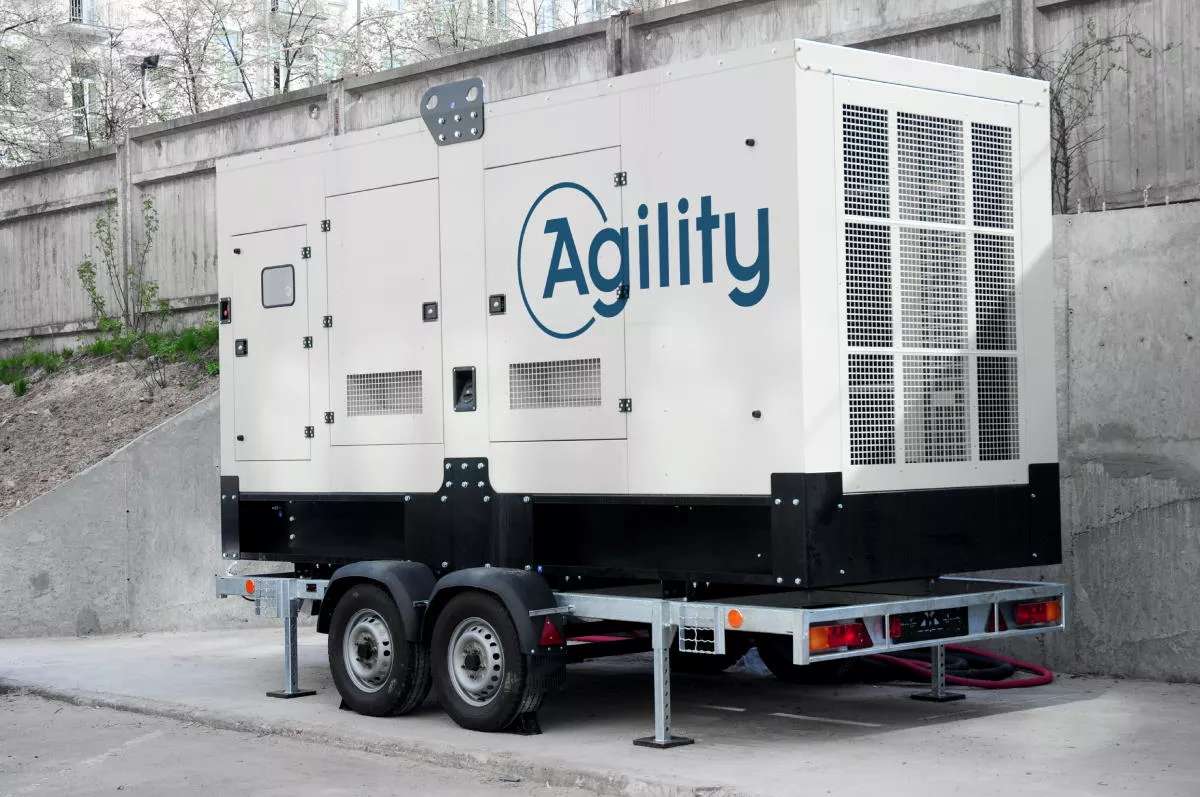
Agility deploys backup power including generators, fuel logistics, and cabling to businesses across the country, with 24/7 support and pre-contracted access for customers. That means when an outage hits, you’re not starting from scratch. You have an established relationship with a provider who knows your facility and has the equipment staged to move.
The difference between businesses that weather a multi-day outage and those that don’t is usually preparation, not the outage itself.
Generator deployment timelines vary based on location and equipment availability, but businesses with pre-contracted recovery plans are prioritized and can typically receive equipment within hours rather than days. Without a pre-existing agreement, response times during regional emergencies are significantly longer as equipment is allocated to contracted customers first.
An on-site generator is owned and maintained by your business — it’s available immediately but requires ongoing maintenance, testing, and fuel management. On-demand backup power means a recovery provider deploys and manages equipment for you when you need it. On-demand solutions are generally more cost effective for businesses that don’t want to carry the capital and maintenance burden year-round.
Power outage costs vary by industry and business size, but estimates for small and mid-sized businesses typically range from $10,000 to $50,000 per hour of downtime. Customer-facing operations and regulated industries tend to see losses at the higher end of that range.
A complete business continuity power outage plan covers backup equipment (owned or contracted), a guaranteed fuel supply, a documented and tested deployment process, critical load prioritization, staff communication protocols, and coordination with your broader business continuity plan.
Your business continuity plan needs to cover both fuel supply and the generator. A generator without a secured fuel supply only protects you for as long as the tank lasts. During regional outages, local fuel becomes scarce quickly. Pre-arranged supply agreements with a recovery provider are an essential part of any backup power plan.