Top 5 Scenarios for Business Continuity Testing
Read more
In the world of business continuity, it’s essential to differentiate between restoration, remediation, and recovery. While these terms are often used interchangeably, each represents a distinct phase in the journey towards operational resilience. This understanding is crucial for businesses striving to maintain seamless operations amid disruptions.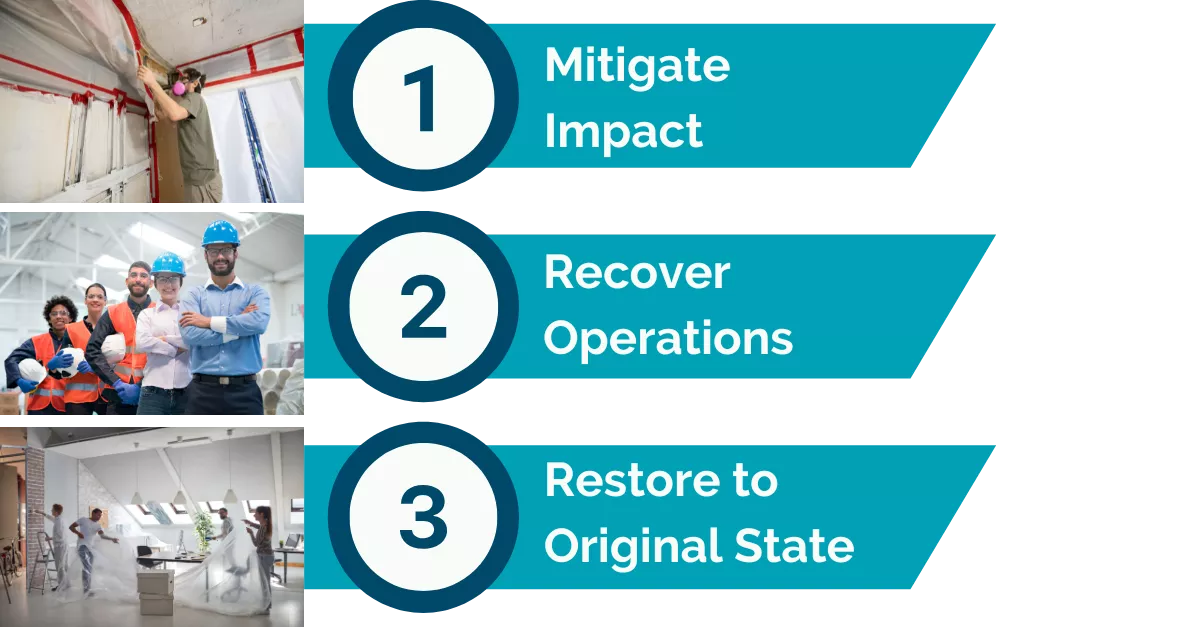
This involves the immediate actions taken to mitigate the impact of a disaster as it unfolds. This includes measures to stop further damage, such as containing a fire, controlling a leak, or removing hazardous materials. While recovery should begin right away to restore business functionality, remediation is also critical to your disaster response planning as can reduce both the cost and length of subsequent restoration projects. Remediation is immediate and prevents further damage.
Similar to remediation, recovery is a core component of your disaster response strategy. But while remediation is focused on minimizing impact, recovery is how an organization can resume business operations and restore full functionality after a disaster. Recovery is a key element of business continuity as it prevents operational, revenue, and productivity losses. While recovery solutions solve for major interruption events like severe weather destruction, flooding, and cyberattacks, it is deployed for what some consider minor events, as well, including planned remodels, power outages, and any other interruption to regular business operations. Recovery allows your business to continue operating amid disaster or interruption while remediation and, later, restoration activities take place.
Restoration is a longer process that is designed to return affected areas or assets to their pre-disaster state. This typically involves cleaning, repairing, and rebuilding damaged infrastructure, equipment, and facilities. Depending on the severity of your disaster, this is a process that can take days, months, or even years. Though restoration is a critical element of business continuity planning, it does not replace remediation or recovery, as most organizations do not have a long enough threshold for downtime to keep operations on pause while remediation services are employed. Restoration returns a business environment to its original state following a disaster or interruption and is typically a lengthy project.
While remediation addresses immediate safety concerns and restoration focuses on long-term, permanent physical repairs, recovery addresses the urgent need to restore business operations and resilience. Agility Recovery is here to help protect your business from disasters and interruptions of all types and sizes. Talk to an Agility expert to learn more about solutions that safeguard your business from disruption, take continuity complexities off your plate, and save businesses thousands on recovery costs compared to when organizations attempt to manage recovery on their own.